Creating Sustainable Change Together
Accelerating the Change

Creating Sustainable Change Together

Creasion Nepal is committed to inclusive, green, and community-driven development through innovative projects and strong partnerships, helping transform communities and empower lives across Nepal.

About Us

Together Driving Sustainable Change

Creasion Nepal is a non-profit organization working to create sustainable environmental and social impact across Nepal. We focus on protecting natural resources while promoting responsible and circular use of materials. Our work empowers youth and women through education, skills development, and green livelihood opportunities. We support communities in addressing climate change, managing waste, and building resilience to disasters.

Focused Areas

We focus on sustainability, resilience, and empowering communities across Nepal.

Tracking Impacts

Welcome to a place where innovation meets impact. We turn ideas into experiences that matter.”

PEOPLE REACHED

0+

individuals and families directly benefited through community-based development and support programs

ENTREPRENEURSHIP

0+

entrepreneurs and youth supported through skills training, innovation, and sustainable income opportunities

YOUTH REACHED

0+

youth engaged through training, leadership programs, and green livelihood opportunities

Reimagining Waste,

Driving Progress

Outcomes delivered through Creasion Nepal's completed initiatives.

tons of plastic waste collected and, recycled through circular, economy value chain systems

0 Tons of Plastic Recycled

tons of plastic waste collected and, recycled through circular, economy value chain systems

in reduced greenhouse gas emissions annually

0 Reduced Carbon Emission(tCO₂e)

in reduced greenhouse gas emissions annually

*tCO₂e = ton of carbon dioxide equivalent

generated through inclusive circular economy and waste-to-value initiatives

0 MRF / 1 PRF

generated through inclusive circular economy and waste-to-value initiatives

Our Impact Across Nepal

North direction
Active Areas

Select a District

Click on a district to view detailed statistics

0100200 km
Scale (Approximate)

Our Projects

Through our diverse portfolio of programs and initiatives, CREASION creates lasting impact in communities across Nepal.

Latest Updates

Water for Life: Protecting our Most Precious Resource

Blogs

Water for Life: Protecting our Most Precious Resource

Water for Life: Protecting our Most Precious Resource Since 1991, World Water Week, organized annually by the Stockholm International Water Institute (SIWI), has been the leading global forum bringing together scientists, policymakers, innovators and communities to address urgent water challenges. The 35th edition, held from 24–28 August 2025, concludes today, with discussions taking place both in person and online under the theme “Water for Climate Action” (UN Water). But why is this matter important for us? The recent drought situation in Terai is a powerful and timely reminder of just how vital water sources are. On July 10, the Madhesh government officially declared the province a drought-hit  zone, with all 136 municipalities, including the worst-hit Birgunj, facing acute water scarcity.  It was not an abrupt decision, but the culmination of years of water-related challenges: years of negligence, misuse, environmental degradation and years of escalating consequences for humans and all forms of life. Water is more than a resource, it’s the lifeblood of civilizations, the cradle of our evolution and a mirror reflecting our collective wisdom or failures. It’s not simply about hydration, but the choices we make as individuals and societies. Have we become smart enough to steward water wisely, or are we losing ground? When communities rally around water conservation or equitable access, they elevate human solidarity. When water is taken for granted or mismanaged, we expose our vulnerabilities. Water is the ultimate test of our empathy and ingenuity. As we debate, plan and act, we define our humanity. Each decision about water access, conservation, restoration reveals whether we lean toward compassion or neglect. World Water Week embodies this tension which can be understood as a global forum where our best intensions confront harsh realities, and where hope meets action. This year’s spotlight “Water for Climate Action” captures a clear truth, without water-centric solutions, climate targets remain out of reach. Water fuels the climate crisis, from drought and floods to ecosystem collapse. Conversely, smart water management offers a potential for mitigation, adaptation, and resilience. The week aims to plan the entire cycle, from freshwater sources to oceans, while centering ecosystem protection, equitable inclusion, and climate justice. Imagine a farmer in the Terai whose fields thrive through climate-smart water systems, resilient against drought. Picture young minds no longer walking miles for water, their days freed for learning. Or a mother in a flood-prone region whose community’s water strategy now safeguards her family. These are not abstract ideas- these are the human heartbeat within the data and debates. Together, we can make a profound difference. Individually, our daily choices like turning off taps, preventing waste, supporting sound water policies- all add up to collective impact. As societies, we must ensure the voices of the vulnerable resonate in water decisions. That is climate justice in action. And as one humanity, standing at a climate–water crossroads, we must ask: will we rise to adapt, share with fairness and vision- or will we falter in neglect and division? At CREASION, among many, we recognize that microplastics in water represent a major, and growing threat to public health. As the WHO report says “Microplastics are ubiquitous in the environment and have been detected in a broad range of concentrations in marine water, wastewater, fresh water, food, air and drinking-water, both bottled and tap water.” We strongly advocate for urgent decisions and meaningful action on this critical issue. Through programs and projects such as RIPL and Project CAP, as well as our broader advocacy efforts, we are actively combating plastic leakage into rivers and landfills while mitigating the risks of microplastic contamination. As part of our practical solutions, we are strengthening and operating both MRFs (Material Recovery Facilities) and PRFs (PET Recycling Facilities). We are also making our best efforts to coordinate with local, provincial, and federal governments to ensure these issues are addressed at the policy level- fostering systemic and sustainable change. Scientific evidence, alongside tragic lived experiences, highlights the devastating impact of the water crisis. World Water Week is that vital nexus where human stories and global science converge- and where we can shift not just policies, but our shared human future. And at the heart of this shared story lies one deeply personal, urgent question: How clean and safe is the water you drink- or the water you provide to your children and loved ones to quench their thirst?

Read more
PLATSIC WASTE CHARACTERIZATION REPORT

Research & Journals

PLATSIC WASTE CHARACTERIZATION REPORT

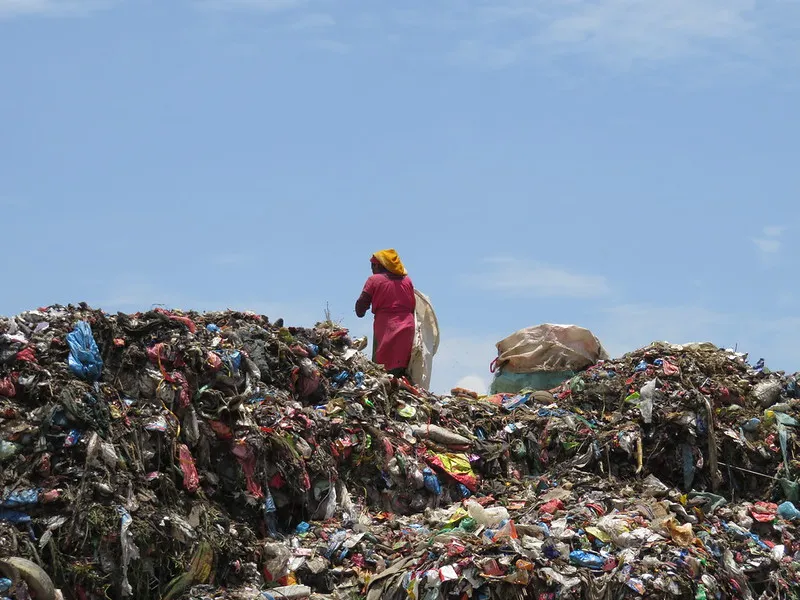
An imperative issue that Nepal is facing is Plastic Waste Management which is a part and parcel of Solid Waste Management. With most of its metropolitan cities and municipalities stepping into the trajectory of rapid urbanization, the dependency on plastic goods is increasing daily. The pervasive practice of dumping plastic waste marks a significant issue for metropolitan cities in Nepal. The major metropolitan cities have started experiencing the stress of rapid urbanization and the additional practice of dumping waste has insinuated flooding in areas where rivers run through residential areas, waterlogging in parks and open spaces, and water contamination. These factors can cause degradation of sanitation for the population, and further affect the environment within and in the periphery of metropolitan areas. Keeping these issues in mind, the Federal Government of Nepal has enacted the Solid Waste Management Act (SWM) 2011 and Solid Waste Management Rules 2013 to maintain a clean and healthy environment by reducing the adverse effects of solid waste. It also poses threat to human health with the spread of diseases, land/soil pollution, and air pollution. These policies placed the local bodies accountable for the management of solid waste and appropriate autonomy to strategically tackle the issue. This report provides an overview of the data on different types of plastic waste in Nepal.

Read paper
Staff Orientation for Project Green Shift Nepal

News & Media

Staff Orientation for Project Green Shift Nepal

CREASION conducted a two day staff orientation workshop for the Project Green Shift Nepal consortium partners. Green Shift: Circularity of Plastic Waste for Net-Zero Carbon Nepal project is funded by the European Union to promote the Circular Economy. The project will be implemented in Madhesh Province, Lumbini Province, and Bagmati Province through the consortium partners CREASION, Restless Development Nepal, and Youth Innovation Lab (YI-LAB).

Learn more

Publications & Reports

Explore our data-rich research, policy analysis, toolkits, guidelines, and other resources on economics and key development topics.

CREASION’s Statement on INC‑5.2 Outcome

CREASION’s Statement on INC‑5.2 Outcome

CREASION’s Statement on INC‑5.2 Outcome

Exercise Book on Climate Change and Circular Economy

Exercise Book on Climate Change and Circular Economy

Exercise Book on Climate Change and Circular Economy

Analysis of Existing Acts and Policies for plastic waste management in Nepal

Analysis of Existing Acts and Policies for plastic waste management in Nepal

Analysis of Existing Acts and Policies for plastic waste management in Nepal

Plastic Waste Characterization Report

Plastic Waste Characterization Report

Plastic Waste Characterization Report

Stories That Inspires

Impact numbers and achievements from our work across Nepal.

Tons of Plastic Waste Recycled

9,343+

Tons of Plastic Waste Recycled

We care for the environment and promote recycling as a way to sustainability. Our efforts support the transition to a circular economy and reduce plastic pollution.

Youth Reached

21,386+

Youth Reached

We engage youth and harness their passion to bring sustainable change to the community. According to the 2011 census, youth cover 40.3% of the population of Nepal—we channel this energy for the betterment of the community.

Children Reached

21,386+

Children Reached

We direct the interest of young children towards environment conservation and protection, building a generation that values and protects our planet.

Exercise Book on Climate Change and Circular Economy

1+

Exercise Book on Climate Change and Circular Economy

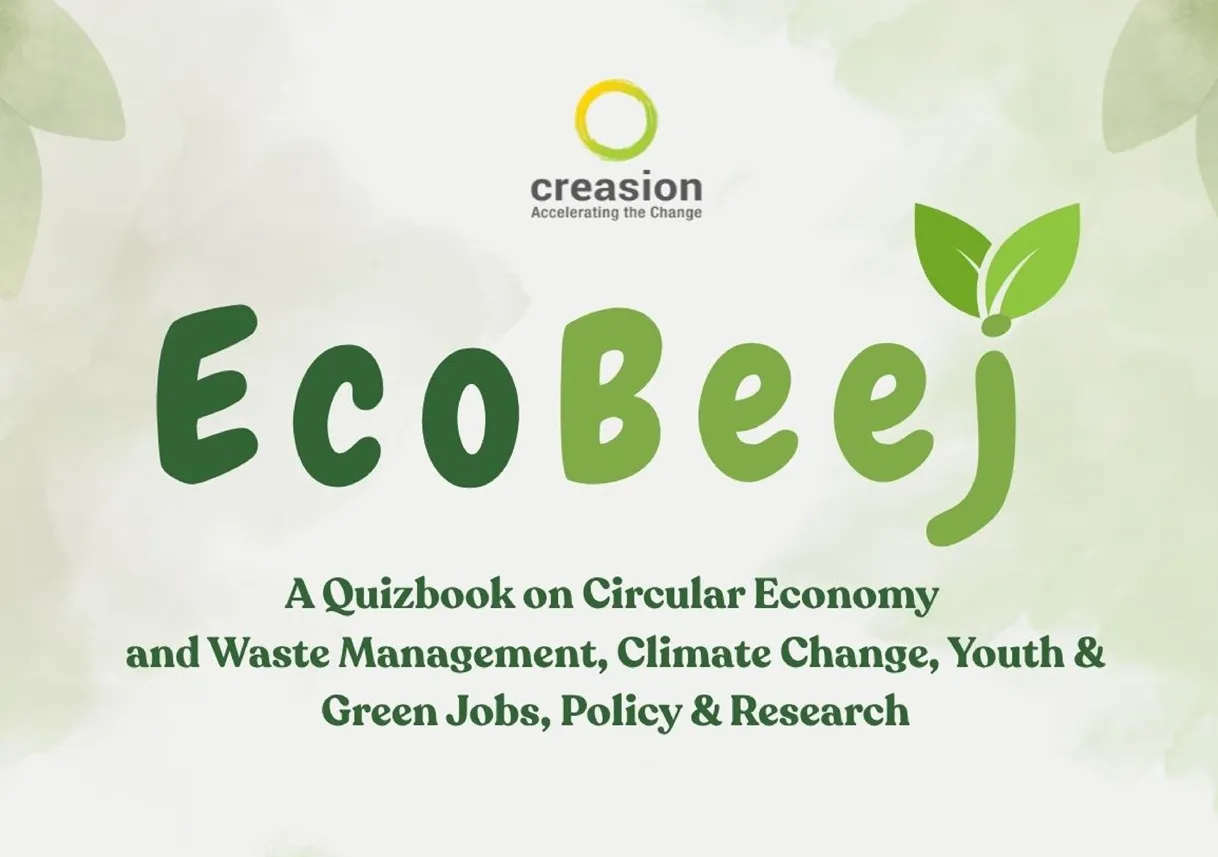
We developed an Exercise Book on Climate Change and Circular Economy to educate and engage young learners in sustainable practices and environmental stewardship.

Infrastructures Built

1,662+

Infrastructures Built

We focus on promoting preparedness and facilitating sustainable solutions for any disaster, building resilient infrastructure for communities across Nepal.

Waste Mapbook Handover

9+

Waste Mapbook Handover

The Waste Mapbooks, providing an overview of local waste systems, have been officially handed over to Lalitpur Metropolitan City, Janakpurdham Sub-Metropolitan City, Bardibas Municipality, Bharatpur Metropolitan City, Gajuri Rural Municipality, Golanjor Rural Municipality, Ichchhakamana Rural Municipality, Hetauda Sub Metropolitan City, and Kathmandu Valley.

Tons of Plastic Waste Recycled

9,343+

Tons of Plastic Waste Recycled

We care for the environment and promote recycling as a way to sustainability. Our efforts support the transition to a circular economy and reduce plastic pollution.

Youth Reached

21,386+

Youth Reached

We engage youth and harness their passion to bring sustainable change to the community. According to the 2011 census, youth cover 40.3% of the population of Nepal—we channel this energy for the betterment of the community.

Children Reached

21,386+

Children Reached

We direct the interest of young children towards environment conservation and protection, building a generation that values and protects our planet.

Exercise Book on Climate Change and Circular Economy

1+

Exercise Book on Climate Change and Circular Economy

We developed an Exercise Book on Climate Change and Circular Economy to educate and engage young learners in sustainable practices and environmental stewardship.

Infrastructures Built

1,662+

Infrastructures Built

We focus on promoting preparedness and facilitating sustainable solutions for any disaster, building resilient infrastructure for communities across Nepal.

Waste Mapbook Handover

9+

Waste Mapbook Handover

The Waste Mapbooks, providing an overview of local waste systems, have been officially handed over to Lalitpur Metropolitan City, Janakpurdham Sub-Metropolitan City, Bardibas Municipality, Bharatpur Metropolitan City, Gajuri Rural Municipality, Golanjor Rural Municipality, Ichchhakamana Rural Municipality, Hetauda Sub Metropolitan City, and Kathmandu Valley.

Join us Today

Join Our NewsLetter

The Communique is CREASION's official newsletter where we bring all undertakings related to our core values, primarily concerning the environment.