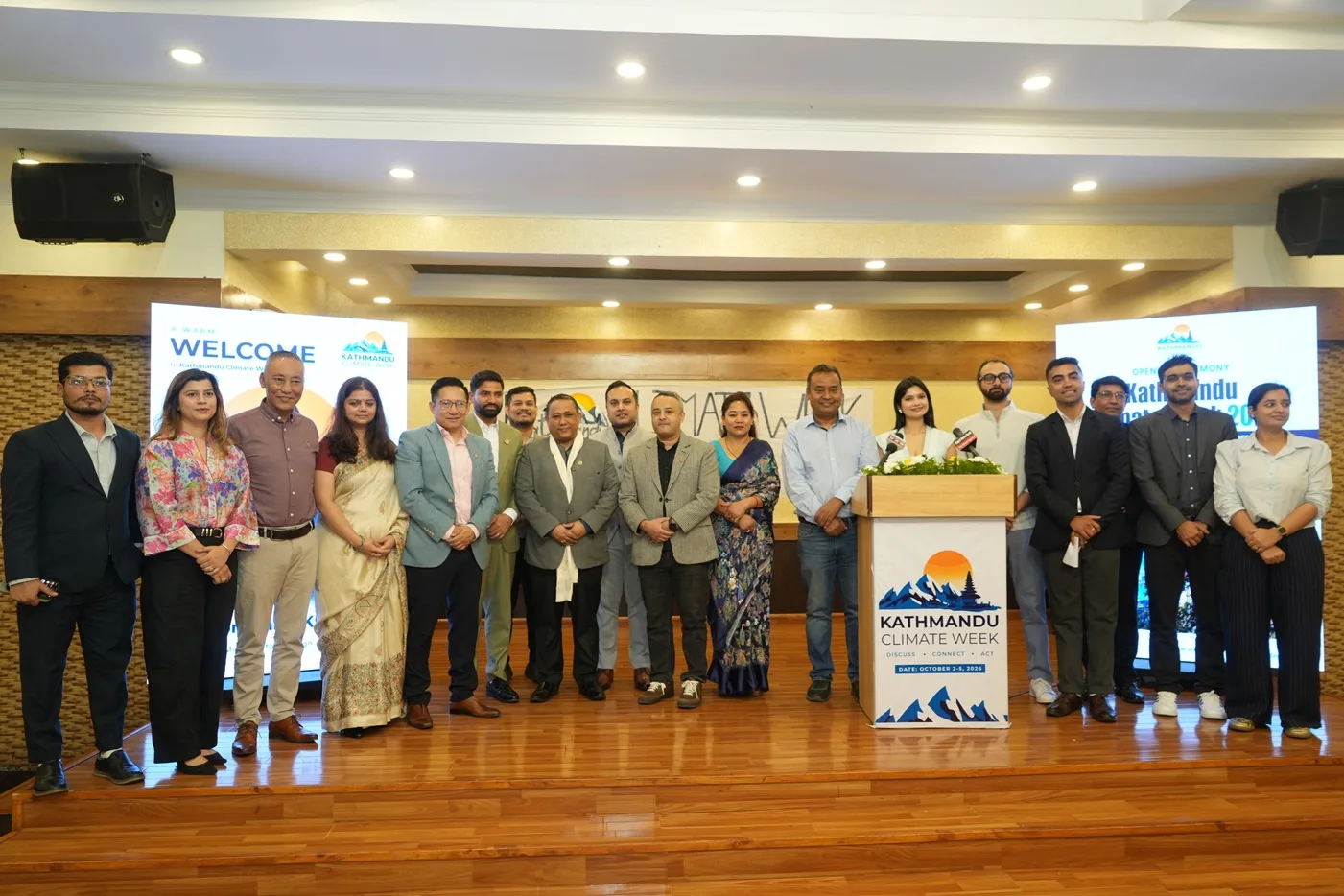
Climate change is a global challenge, but its impacts are felt differently across the world. Nepal contributes minimally to global emissions, yet it is among the countries most exposed to their consequences. Rising temperatures are accelerating glacial melt, weather patterns are shifting, and flash floods and prolonged droughts are becoming more frequent.
Kathmandu Climate Week brings these realities into focus, creating a space for dialogue, collaboration, and collective action to turn climate commitments into meaningful change.
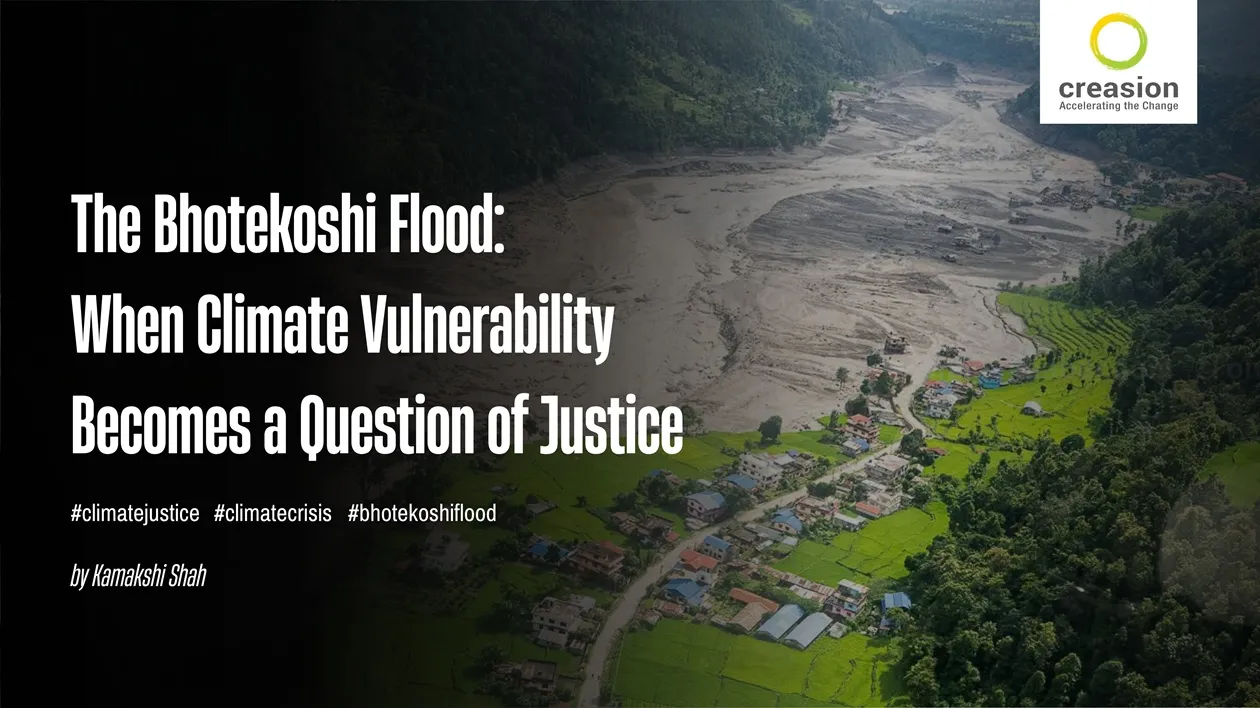
The August 2026 Rasuwa-Bhotekoshi Flood showed how quickly climate risks turn into catastrophes, national emergencies, and human loss. Climate change is no longer a distant threat, but a present reality. Climate change is already reshaping our communities, economies, and ecosystems. The urgency is clear, and the time to turn commitment into meaningful action is now.
This was the setting for Kathmandu Climate Week 2026, the first edition of what is envisioned as an annual, collaborative platform for climate action. The Week was created to bring three realities into sharper focus: the injustice of climate change, Nepal’s significant strengths and potential, and the gap between the two. Nepal has the potential to lead on climate action, from its clean energy resources and long-standing traditions of community-led resource management to its sustainable agricultural practices and vibrant civil society and youth movements.
Yet, the challenge is not a lack of ambition or ideas. It is the ability to translate ambition into implementation. Climate finance bottlenecks, data and evidence gaps, institutional and structural barriers, and limited access to resources continue to prevent promising solutions from reaching the scale and communities that need them most.
Kathmandu Climate Week 2026 was therefore an effort to move beyond conversations about what needs to happen and focus on how we turn Nepal’s climate potential into meaningful, inclusive and implementable action.
The week was built on a simple idea: Nepal’s voice in global climate diplomacy is strongest when it is grounded in the experiences of its people and the results of action on the ground. Kathmandu Climate Week created a space where local realities, national priorities and global climate commitments could connect, ensuring that Nepal’s climate agenda reflects both the challenges communities face and the solutions they are already advancing.
The platform emphasized amplifying frontline voices. Mountain communities, Indigenous peoples, women, youth, and communities affected by recent disasters were positioned not simply as beneficiaries of climate action, but as important actors in shaping national and international priorities. Their experiences and knowledge are essential to understanding what climate action needs to look like in practice.
Kathmandu Climate Week also aimed to unlock finance and innovation by creating connections between public, private and development finance and locally led adaptation, green infrastructure and emerging technologies. At the same time, it showcased what works, bringing visibility to promising practices from government, civil society and other partners, while remaining candid about the gaps between climate needs, commitments and actual responses.
Ultimately, the week is intended to be more than a one-off event. It aimed to build a lasting collaborative platform through which stakeholders could co-create a climate-resilient plan of action and establish a foundation for future Climate Weeks by strengthening collective ambition while focusing on the practical steps needed to turn that ambition into action.
Day 1: Opening and High-Level Dialogue
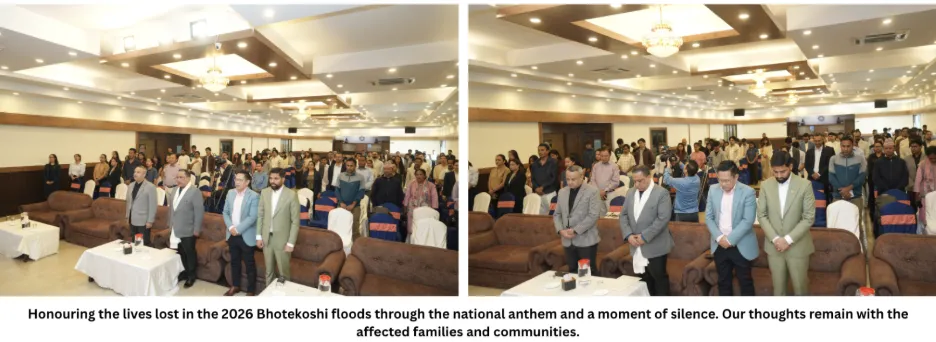
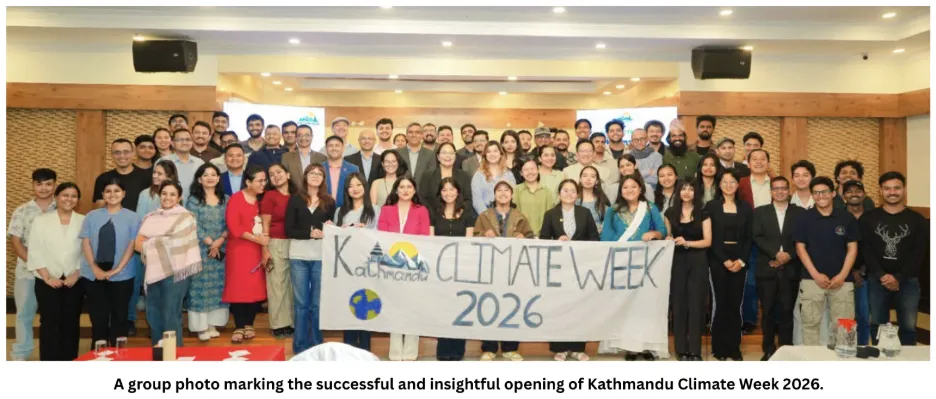
The first day of Kathmandu Climate Week 2026 set the tone for the four-day platform with a focus on climate justice, Nepal’s role in global climate diplomacy, and the need to translate commitments into action. The day opened with a national-level opening that also created space to remember lives lost in recent climate-related disasters, grounding the discussions in the human realities of climate change.
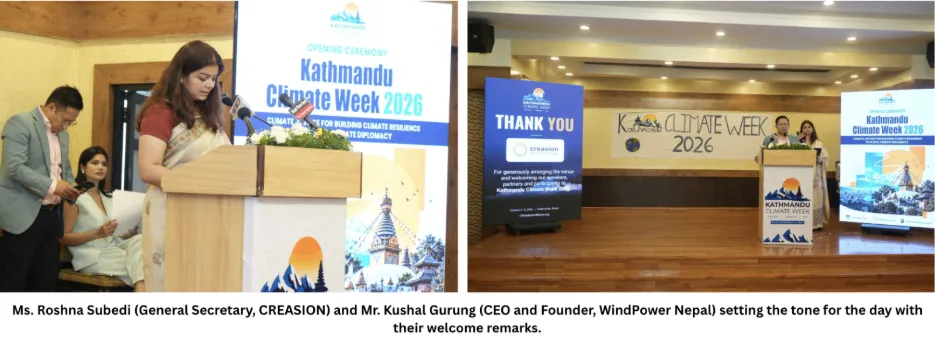
Ms. Roshna Subedi, General Secretary of CREASION, and Mr. Kushal Gurung, Founder and CEO of WindPower Nepal, started by setting the tone for Kathmandu Climate Week 2026 by reflecting on why a platform of this nature was needed. They highlighted the urgency of bringing climate conversations into a shared space for dialogue, action, and collaboration.
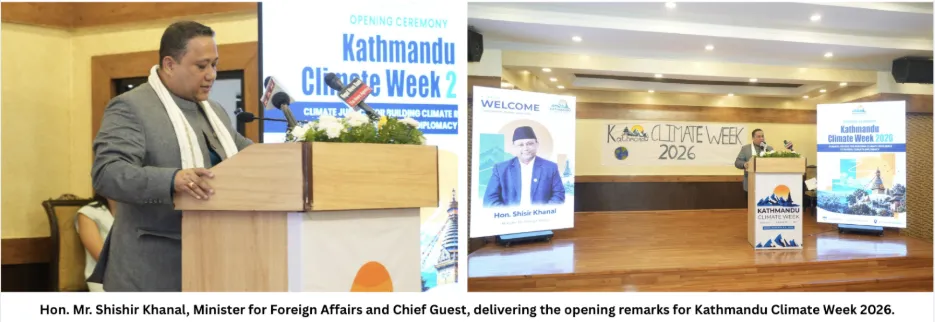
The chief guest, Hon. Mr. Shishir Khanal, Minister for Foreign Affairs and Chief Guest, talked about the importance of climate justice and diplomacy and the urgent need for Nepal to strengthen its climate resilience and adaptive capacity. His remarks reinforced the importance of connecting Nepal’s domestic climate realities with its engagement in global climate processes and ensuring that Nepal’s voice is grounded in the experiences and priorities of its people.
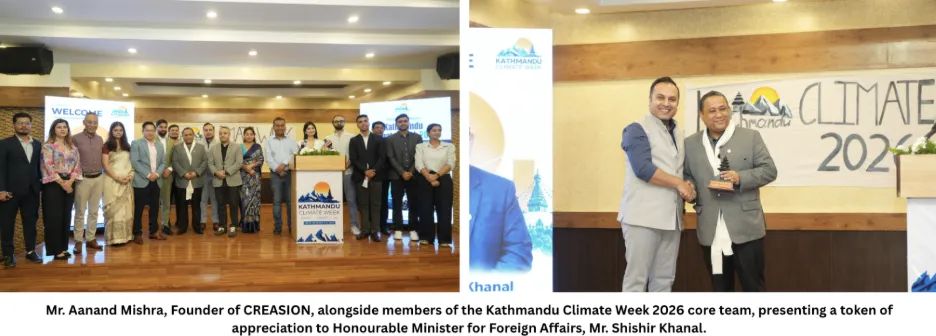
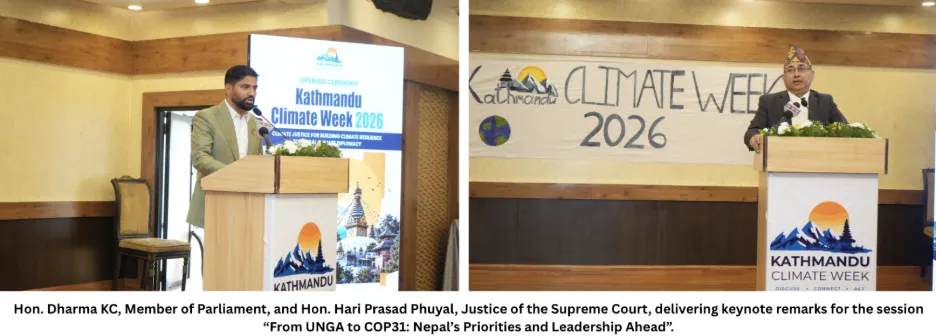
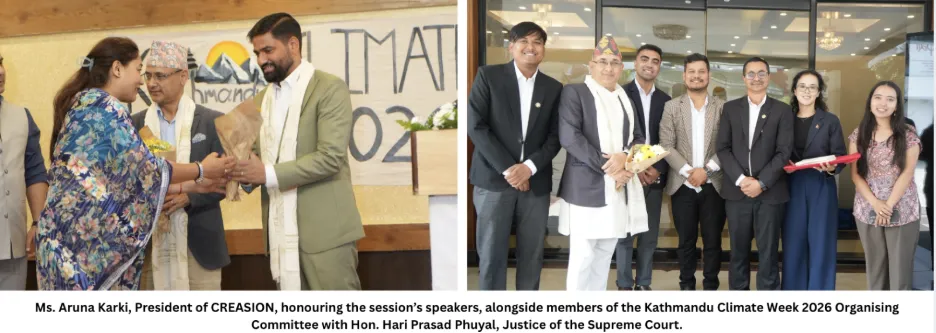
The opening then moved into the first flagship session, “From UNGA to COP31: Nepal’s Priorities and Leadership Ahead,” which explored Nepal’s priorities and leadership in the international climate space. The session featured a technical keynote by Dr. Maheshwor Sir, Joint Secretary at the Ministry of Agriculture, Forest and Environment and Chief of the Climate Change Management Division, followed by keynote remarks from Hon. Hari Prasad Phyuyal, Justice of the Supreme Court, and Hon. Dharma KC, Member of Parliament. The session was moderated by Ms. Susmita Mishra of the Kathmandu Climate Week Organizing Committee.
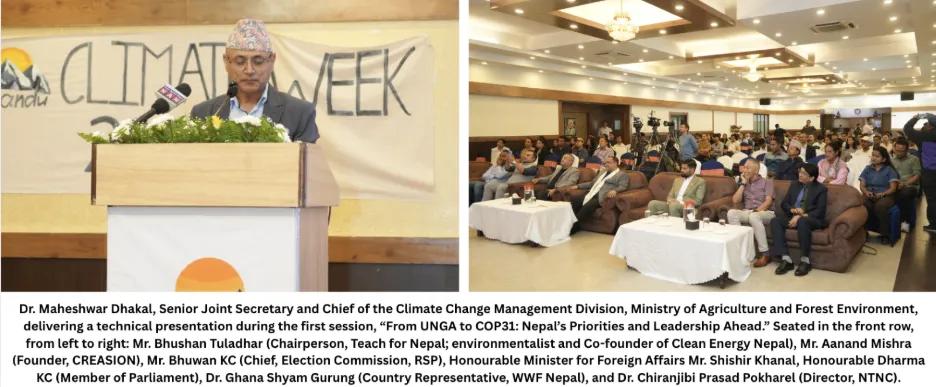
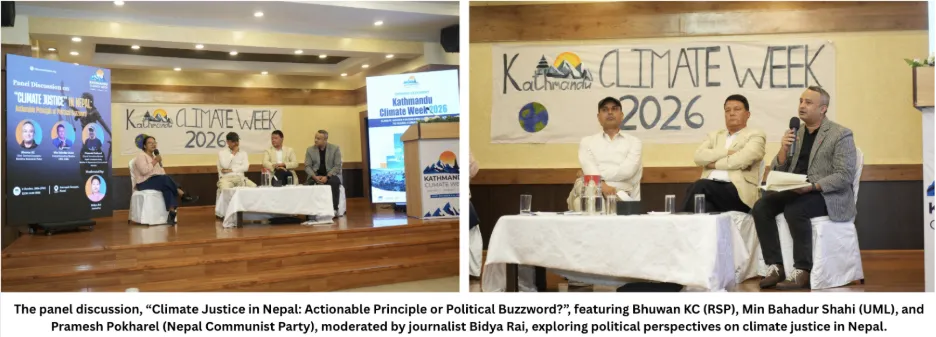
The second flagship session, “Climate Justice in Nepal: Actionable Principle or Political Buzzword,” brought together representatives from different political parties to examine the role of political leadership in advancing climate justice in Nepal. The session featured Bhuwan KC, Chief of the Election Commission, representing the Rastriya Swatantra Party (RSP); Min Bahadur Shahi, Central Committee Member of the CPN-UML; and Pramesh Pokharel, Central Committee Member of the Nepal Communist Party. The discussion focused on the need to approach climate change as a shared national priority that extends beyond political affiliations. Speakers reflected on the role that political parties have played in shaping Nepal’s climate agenda, what has been achieved under previous governments, and where further action is needed. The conversation emphasized that climate action requires continuity beyond political cycles and stronger collaboration across parties and institutions.
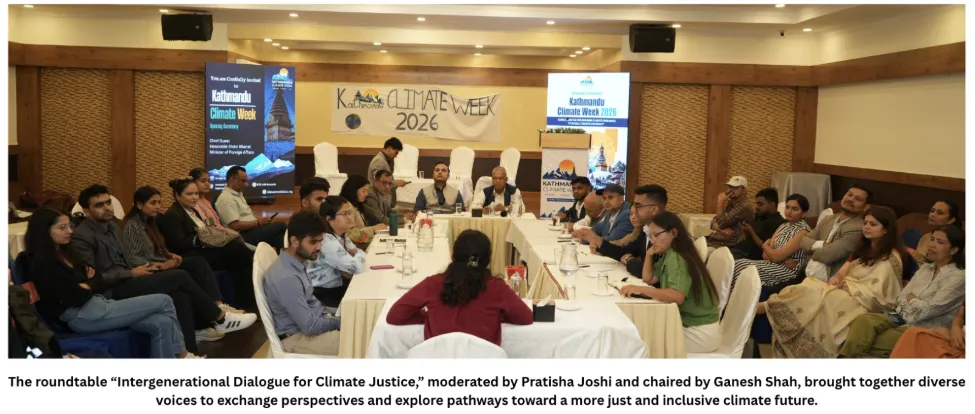
The day concluded with an Intergenerational Roundtable on Climate Justice, bringing together elders, experts, young people and children to reflect on what climate justice means across generations. Participants included Arnab Chaudhary, Ganesh Shah, Aanand Mishra, Krishna Shah, Anustha Ghartimagar, Jaldeep Sapkota, Pravesh Shiwakoti, Nischal Raj Gautam, Samsad Ahmed, Gobinda Bahadur Shahi, Srichha Pradhan, Tashi, Dikshit Thapa Magar and Sujit Kumar Pandit.
Aanand Mishra, founder of CREASION, challenged the way climate change is often framed as a future problem. He argued that the language itself can create distance from the reality people are already experiencing: the climate has changed, and its consequences are already being felt. This framing called for recognizing climate change as an immediate challenge. He also emphasized the importance of creating space for communities that are often left out of high-level climate conversations, including waste workers, farmers and other frontline communities whose livelihoods and daily lives are directly affected by environmental and climate pressures.
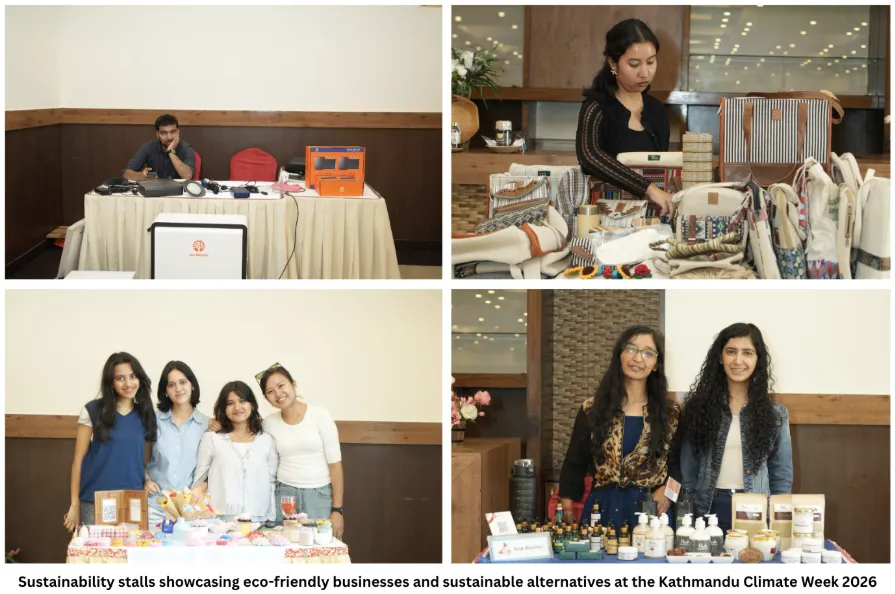
This day also featured sustainability stalls showcasing businesses and organizations working to make sustainable choices more accessible through environmentally conscious products and solutions. The stalls included Ecorevive, Eco Kanduk, A.B. Biodegradable Products Pvt. Ltd., Terra Nepal, Manbatti, and Agri Direct Global Private Limited. By bringing these enterprises into the Kathmandu Climate Week space, the event created an opportunity for participants to engage directly with locally available sustainable alternatives, learn about emerging green businesses, and explore how everyday consumption and production choices can contribute to a more sustainable future. The stalls also highlighted the role of entrepreneurs and the private sector in advancing circular economy practices, promoting responsible consumption, and turning sustainability commitments into practical solutions.
Together, the conversations on Day 1 established a central theme for Kathmandu Climate Week. Climate action must be grounded in lived experience. Climate diplomacy and national commitments matter, but they need to remain connected to the people, communities and frontline workers experiencing climate impacts and the solutions already emerging from within those communities.
Day 2: Decentralized Conversations Across Kathmandu
October 3, 2026: Day 3 of Kathmandu Climate Week 2026 took the conversation beyond a single venue, with simultaneous plenary sessions held across different locations in Kathmandu. As knowledge partners, Kings College, Apex College, Thames College, Techspire College, Lincoln International College, Embark College and FNCCI provided spaces for these conversations, helping decentralize the Week and create opportunities for different communities to engage with climate issues in their own spaces.
The sessions were organized across a range of thematic areas, including Climate Justice; Loss and Damage; Sustainability and Climate Action; Technology and Climate Change; and the Private Sector for Climate Justice. Discussions explored questions ranging from the role of youth, Indigenous peoples and civil society in shaping Nepal’s climate justice agenda to climate finance and loss and damage, the role of research and media, circular economy and sustainable agriculture, technology and AI, climate-resilient infrastructure, and the role of businesses and financial institutions in advancing climate action.
This format also reflected the collaborative nature of Kathmandu Climate Week. Rather than concentrating climate conversations within one conference hall, Day 2 created a city-wide platform where different voices, sectors and perspectives could meet around a shared question: what does climate justice mean for Nepal, and what will it take to turn it into action?
Circular Economy Beyond Sustainability and Pathway for Climate Justice
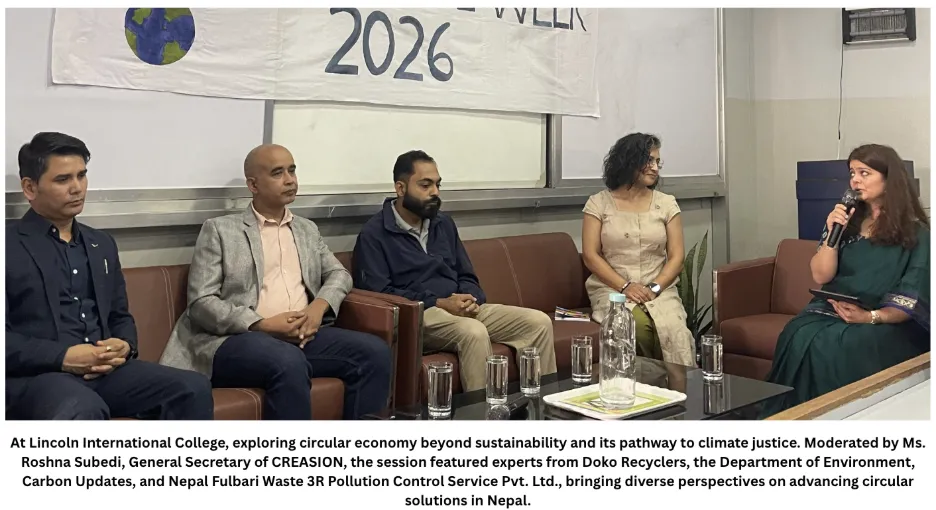
As part of Day 2 of Kathmandu Climate Week, CREASION led a panel discussion at Lincoln International College titled “Circular Economy Beyond Sustainability and Pathway for Climate Justice.” Moderated by Ms. Roshna Subedi, General Secretary of CREASION, the session brought together Ms. Ashma Basnyat of Doko Recyclers, Mr. Saroj Kumar Chaudhary of the Department of Environment, Mr. Gunjan Ghimire of Carbon Updates, and Mr. Arjun Aryal of Nepal Fulbari Waste 3R Pollution Control Service Pvt. Ltd. to explore how Nepal can build more circular, inclusive, and climate-resilient systems.
The discussion highlighted the need to move beyond recycling towards rethinking how resources are designed, used, and recovered. Speakers explored opportunities to turn waste into valuable resources, strengthen waste-management systems, support and formalize waste workers, and create green businesses and livelihoods. They also emphasized the role of technology and innovation, alongside stronger government policies, municipal coordination, private-sector engagement, and practical measures such as source segregation and extended producer responsibility.
The session concluded by reinforcing that a circular economy is not simply about managing waste, but about transforming how resources are valued and governed. By connecting environmental action with fairer livelihoods, worker protection, and inclusive economic opportunities, circularity can become an important pathway to climate justice and community resilience in Nepal.
Day 3: High-Level Dialogue and the Kathmandu Call for Climate Justice
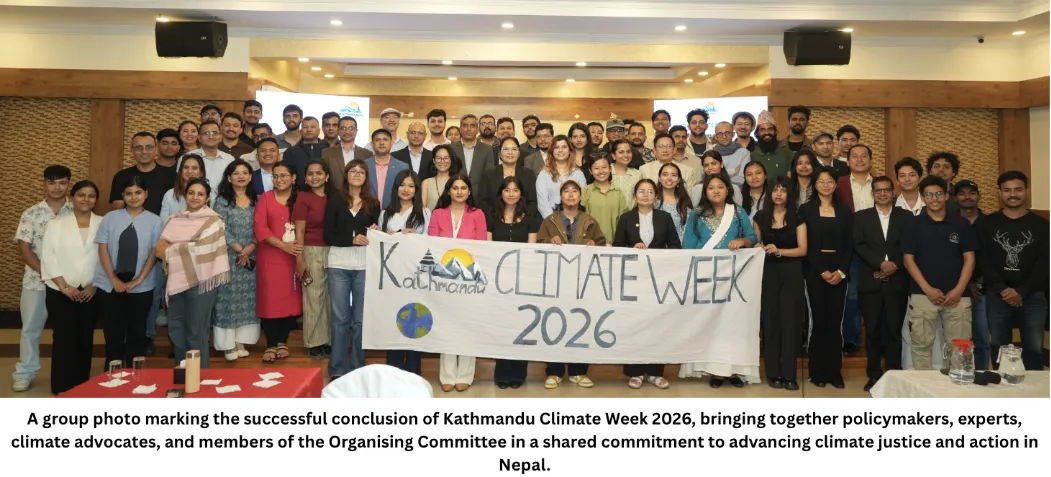
October 4, 2026: Day 3 of Kathmandu Climate Week continued the conversation on climate justice through sessions bringing together political representatives, media, and policy stakeholders. The day concluded with a closing ceremony that reflected on the discussions held throughout the week and highlighted the need to translate dialogue into concrete action.
High-Level Sessions: Connecting Political Leadership and Climate Diplomacy
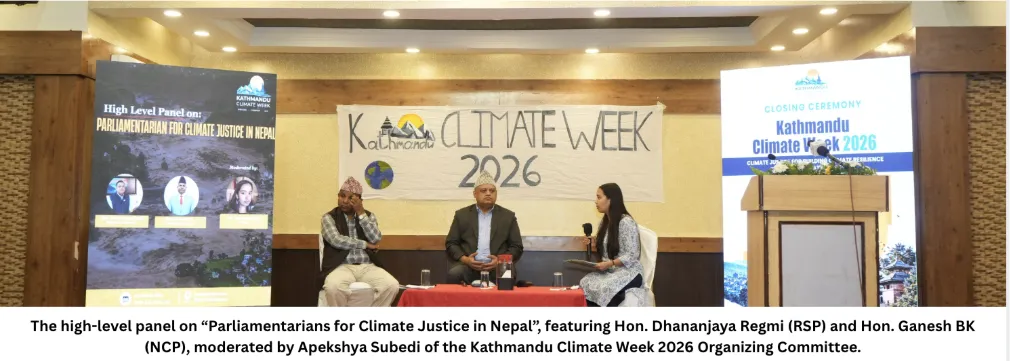
The first session on climate justice featured Members of Parliament Ganesh BK, a member of the International Relations and Tourism Committee, and Dhananjay Regmi. Moderated by Apekshya Subedi, the session provided a platform to discuss the role of political leadership in advancing climate justice and strengthening Nepal’s response to climate challenges.
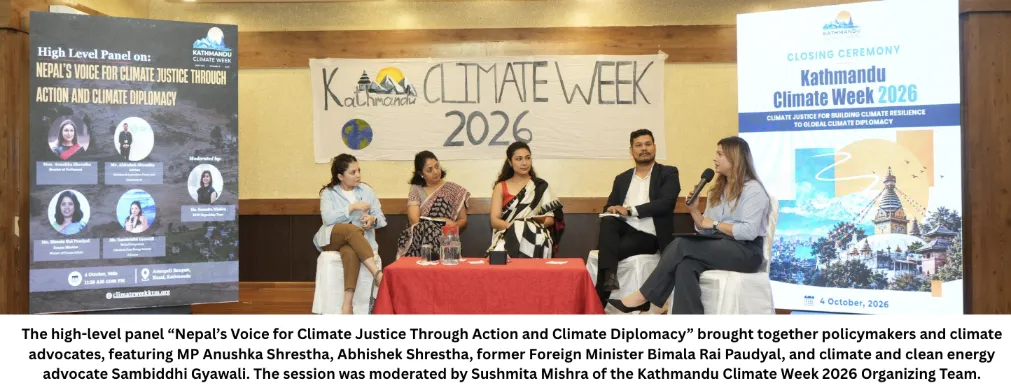
The second session, Amplifying Nepal’s Voice for Climate Justice through Action and Climate Diplomacy, was facilitated by Susmita Mishra. The discussion brought together Member of Parliament Anushka Shrestha, Abhishek Shrestha, adviser to the Minister for Agriculture, Forests and Environment; former Foreign Minister Dr. Bimala Rai Paudyal; and media entrepreneur Sambriddhi Gyawali. Bringing together perspectives from politics, diplomacy, and the media, the session explored how Nepal can strengthen its voice in international climate discussions while translating its priorities into meaningful domestic action.
From Dialogue to Commitments
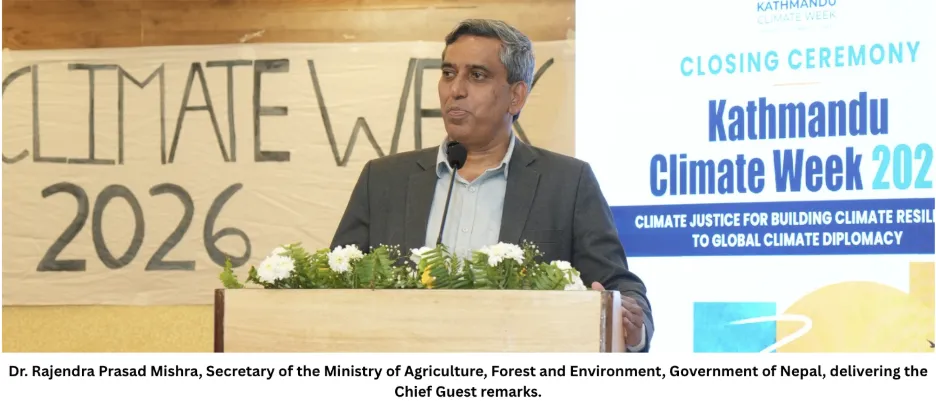
The closing ceremony was attended by Chief Guest Dr. Rajendra Prasad Mishra, Secretary of the Ministry of Agriculture, Forests, and Environment. In his remarks, he emphasized the importance of collaboration among government institutions, civil society, development partners, and other stakeholders in strengthening Nepal’s climate policymaking and representation in international forums.
An important contribution came from Kalpana Tamang, a young girl from a community affected by the Rasuwa Himalayan Tsunami. Sharing the experiences and concerns of disaster-affected communities, she called for climate justice that recognizes the realities of people bearing the consequences of environmental disasters. Her contribution reinforced the importance of ensuring that frontline communities, including children and young people, are not simply included in climate discussions but are heard in decisions that affect their lives.
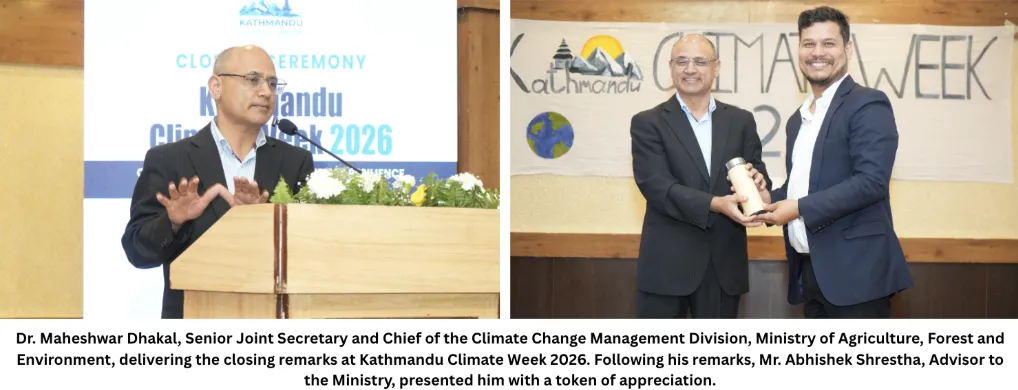
The ceremony also featured closing reflections from Dr. Maheshwar Dhakal of the Climate Change Management Division, Ministry of Agriculture, Forests and Environment; Ayush Joshi of Save the Children; and a representative from the Bhotekoshi flood-affected community. Together, these perspectives underscored the need to connect institutional action with the experiences and priorities of communities on the frontlines of climate impacts.
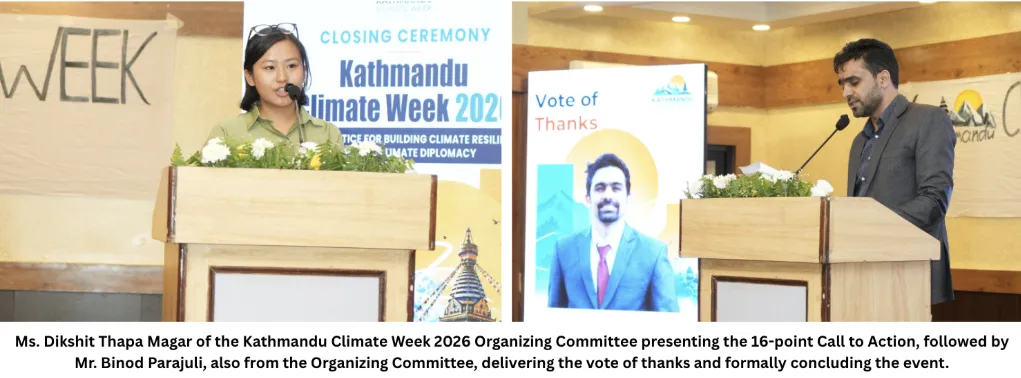
A central outcome of the closing ceremony was the presentation of the Kathmandu Call for Climate Justice, a 16-point declaration presented by Dikshit Thapa Magar on behalf of the KCW Organizing Committee. The call urged the Government of Nepal and the international community to move beyond commitments and pursue immediate, effective, and results-oriented action on climate justice. It provided a shared framework for carrying forward the priorities raised throughout Kathmandu Climate Week.
The 16-Point Call to Action:
Formulating a Climate Justice Act to establish a legally binding statutory framework that protects vulnerable communities.
Creating a Permanent Parliamentary Committee on Climate Justice to oversee national legislative responses and policy accountability.
Ensuring inclusive policy redrafting by guaranteeing decentralized, meaningful participation from local and provincial governments in the upcoming Nepal Climate Change Policy 2026.
Grounding actions in science by mandating that all national and local climate adaptation decisions rely strictly on empirical data.
Conducting real-time cryosphere research to continuously monitor glaciers and ice sheets to prevent cascading disasters.
Advocating for the Mountain Agenda at global summits like COP31 to highlight trans-Himalayan vulnerability through international partnerships.
Assembling a permanent negotiation team consisting of a multi-sectoral, highly trained delegation to elevate Nepal's voice in global climate diplomacy.
Demanding grant-based finance over loans to prevent adding debt burdens to the Global South.
Directing funds to the grassroots by restructuring channels to eliminate administrative bottlenecks and directly support frontline communities.
Integrating the private sector as a core, responsible driver of sustainable climate investments.
Safeguarding indigenous land rights through strict adherence to the principles of Free, Prior, and Informed Consent.
Ensuring frontline inclusion by giving women, youth, Dalits, sexual minorities, and people with disabilities explicit representation and institutional decision-making power.
Elevating disaster-affected leadership by putting youth and individuals from ravaged areas like Rasuwa-Bhotekoshi in charge of designing local rehabilitation policies.
Recognizing climate-induced displacement as a critical human rights and security crisis that demands immediate legal protections.
Scaling up localized nature-based solutions to build community-led ecosystem resilience against extreme weather events.
Strengthening cross-border regional cooperation on transboundary river basin management and early warning disaster systems.
Binod Parajuli, a member of the Organizing Committee, delivered the vote of thanks, acknowledging the contributions of speakers, partners, organizers, and participants who helped bring the event together.
This day reinforced the key message of Kathmandu Climate Week, highlighting how climate justice must extend beyond dialogue and declarations to tangible action, stronger accountability, and sustained collaboration. By bringing together political leadership, policy expertise, media perspectives, and the voices of affected communities, the day concluded KCW with a collective call to turn shared priorities into meaningful and lasting climate action.
DAY 4: Closing Movie Screening – Elephants in the Fog
October 5, 2026: Kathmandu Climate Week concluded on Day 4 with a special screening of Elephants in the Fog, Nepal’s official submission to the Academy Awards. This event brought together climate, conservation, policy, and creative perspectives to close the week. Hosted by CREASION at QFX Chhaya Center, the screening provided a different way of engaging with climate change through storytelling, place, wildlife, and the lived realities of communities and ecosystems.
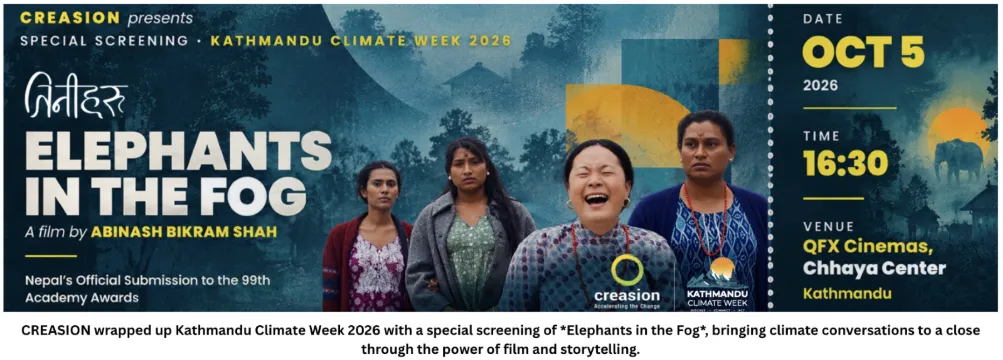
The film offered an opportunity to explore the intersectional dimensions of climate and environmental change. Through its setting and portrayal of wildlife in relation to its surrounding landscape, Elephants in the Fog demonstrated that environmental issues cannot be separated from the social, economic, and cultural contexts in which they occur. Rather than presenting climate change as an isolated environmental issue, the film encouraged audiences to consider how changing ecosystems, human communities, and wildlife are interconnected.
The screening was attended by a diverse group of guests, including high-level political representatives such as Jagdish Kharel, Khima BK, Krantishika Dhital, Prakash Chandra Pariyar, Manish Khanal, and Migma David. CREASION stakeholders, Kathmandu Climate Week organizers, and other guests were also in attendance. Their participation reflected the broader objective of the week to bring climate conversations beyond technical and environmental spaces and into wider public, political, and cultural dialogue.
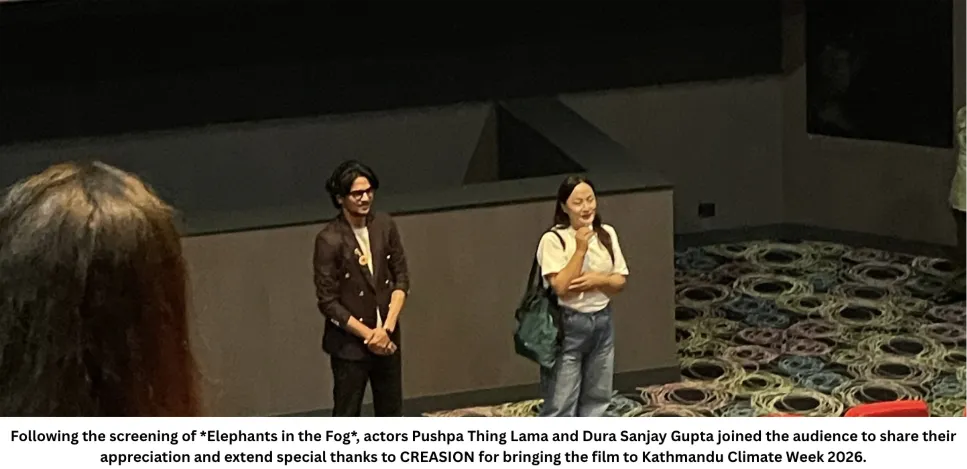
Following the screening, actors Pushpa Thing Lama and Dura Sanjay Gupta joined the audience to express their appreciation and extend special thanks to CREASION for bringing the film to Kathmandu Climate Week. Their presence provided a meaningful conclusion to the screening and connected the creative work behind the film with the audience that had engaged with its message.
As the closing activity of Kathmandu Climate Week, the screening reinforced an important message carried throughout the week: climate action is not only about policies, technologies, and targets, but also about how we understand the relationship between people, communities, culture, and the natural world. Ending Kathmandu Climate Week through film created space for reflection and storytelling, while leaving participants with a reminder that climate justice must also account for the many interconnected realities that shape how climate and environmental change are experienced.