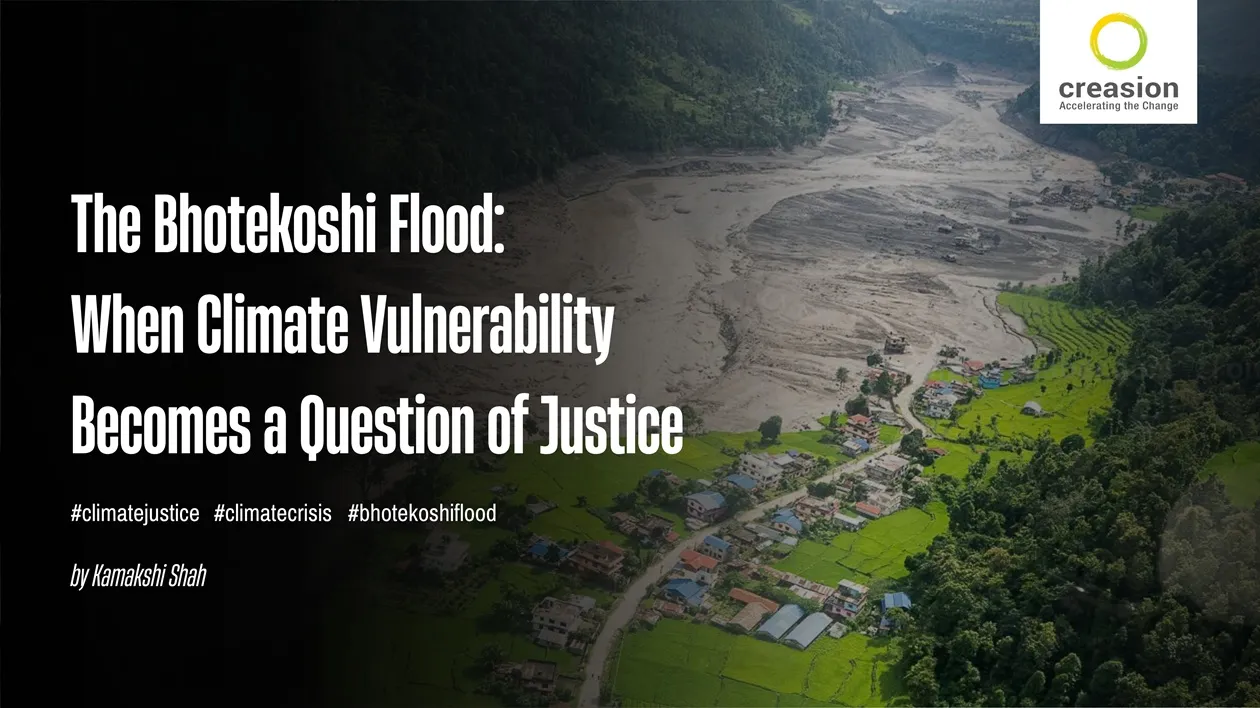
On August 26, 2026, a major flood originating on the Tibetan side of the Bhotekoshi River swept through Rasuwa, sending floodwaters downstream into Nuwakot, Dhading, and Chitwan and along the Trishuli River as far as Mugling. What followed was destruction on a scale that is still difficult to fully comprehend. Roads and bridges were washed away, hydropower facilities were damaged, communities were cut off, and people were left stranded in some of Nepal’s most difficult terrain. The full human toll remains uncertain. Disrupted communications, difficult geography, and ongoing search-and-rescue operations have made it difficult to establish how many people have died or remain missing, and casualty figures continue to evolve. Additionally, the damage to infrastructure has been extensive. The 18-kilometre Syabrubesi–Rasuwagadhi road, Furkekhola Bridge, and Keurini–Fosretar Bridge were washed away, while 19 bridges along the Trishuli River were damaged. Several hydropower facilities, including the 111 MW Rasuwagadhi project, 60 MW Upper Trishuli 3A, Chilime, Sanjen, and Langtang, were damaged and taken offline. National transmission lines and at least 40 kilometres of roads were also affected. As I write this, 1,114 people have lost their lives, 3,916 remain unaccounted for, and an estimated 1.6 million people are expected to be affected by the disaster. These figures remain fluid as search, rescue, and recovery operations continue across the affected areas. By the time you read this, the numbers may have risen further, showing the continuously evolving scale of this disaster.
While these numbers tell us something about the scale of the disaster, they do not tell the whole story.
A destroyed road is not only a loss of infrastructure. For a remote community, it can mean that food cannot arrive, a sick person cannot reach a hospital, children cannot get to school, farmers cannot take their produce to market, and rescue teams cannot reach those who need them. A destroyed bridge is not simply a financial loss recorded in a damage assessment. It can determine whether a household remains connected to the rest of the country or becomes isolated. And this is where the Bhotekoshi flood becomes more than a story about a natural hazard. It becomes a story about who is vulnerable, why they are vulnerable, and who has the resources and power to recover.
This is not Nepal’s first warning.
The Bhotekoshi flood did not occur in isolation. Nepal has experienced a growing frequency of severe floods, landslides, glacial hazards, and other climate-related disasters in recent years.
In September and October 2024, floods and landslides caused more than 250 deaths, affected more than 1,000 families, and damaged or destroyed nearly 1,500 houses, alongside significant disruptions to essential services (ReliefWeb, 2024)
Then, on May 14, 2025, a sudden Glacial Lake Outburst Flood in Tilgau, Humla, triggered an ice-and-debris avalanche despite the absence of rainfall. Thirty-two villagers were displaced, and five bridges were destroyed (ReliefWeb, 2025)
A similar disaster struck the Rasuwagadhi corridor on July 8, 2025, when flooding along the Bhotekoshi River swept away the Miteri Friendship Bridge and killed at least nine people. Just weeks later, another flood on July 30 damaged roads and infrastructure in the same corridor. This points to the region’s repeated exposure to sudden and destructive flood hazards (The New Humanitarian; Nepal News).
Each event is different, and Nepal’s climate risks extend beyond floods and glacial hazards to include droughts, changing rainfall patterns, landslides, and other climate-related extremes. Taken together, however, these events point to a recurring and increasingly concerning pattern of hazards affecting communities across the country. The question, then, is no longer simply whether another disaster will occur, but whether communities have the resources, infrastructure, information, and institutional support needed to withstand it when it does.
A flood does not affect everyone equally.
It is easy to think of a disaster as something that happens to an entire community at once. But the reality is much more unequal.
Nepal has made significant progress in reducing poverty and improving living standards. The poverty headcount ratio, measured using the World Bank's USD 3-per-day threshold, declined from 55.9% in 2003 to 2.4% in 2022, while GDP per capita increased substantially over the same period. Yet national progress can conceal deep differences between households and between rural and urban areas. Around one-third of Nepal's population remains rural, and the 2022/23 Nepal Living Standards Survey recorded a rural poverty headcount of 24.66%, compared with 18.34% in urban areas. (World Bank; NLSS 2022/23).
These structural disadvantages are precisely what determine climate vulnerability.
Around 62% of households in Nepal are agricultural households, while approximately 45% of people work in agriculture (NLSS 2022/23). For many households, livelihoods remain closely tied to land, livestock, rainfall, and other climate-sensitive systems. The decline in agricultural employment does not necessarily mean that people are moving into stable or secure jobs. In many cases, it is accompanied by informal and seasonal employment and dependence on unstable remittance flows, leaving households vulnerable to external shocks such as disasters. (Sahadev, Ananta & Kusum, 2025)
The same is true of access to basic services. Rural and mountainous communities and low-income households can face poorer access to infrastructure and services, food inadequacy, limited healthcare facilities, long journeys to reach medical care, and costs that make healthcare difficult to afford. Some rural households continue to live in vulnerable homes made from materials such as mud, thatch, and straw that provide little protection against natural hazards. (Sahadev, Ananta & Kusum, 2025)
These are not separate problems from climate change. They are what determine whether a household can withstand climate shocks.
A family with savings, secure housing, insurance, alternative sources of income, reliable transport, and access to healthcare may be able to recover from a flood relatively quickly. A family living in a fragile house, dependent on rainfed agriculture, without savings or insurance, and located hours away from a functioning road or health facility faces an entirely different reality.
Climate vulnerability is therefore not simply about exposure to a hazard. It is also about sensitivity and the capacity to cope, recover, and adapt.
Nepal faces the climate crisis without being a major contributor to it.
This inequality becomes even more striking when Nepal's climate vulnerability is considered alongside its contribution to global greenhouse gas emissions.
Nepal ranked 139th out of 182 countries in the 2022 ND-GAIN Index, reflecting its high climate vulnerability and limited adaptive capacity. In 2024, it was identified as the sixth most climate-affected country due to the sheer scale of people, livelihoods, and economic activities impacted by climate-related disasters (Germanwatch, 2024). Yet despite facing some of the world's most severe climate risks, Nepal ranked just 183rd out of 207 countries in per-capita greenhouse gas emissions and 95th in total emissions (Worldometer, 2024). This stark contrast highlights the climate justice dilemma Nepal faces: it bears a disproportionate burden of climate change while contributing relatively little to the emissions driving the global crisis.
Climate change is intensifying monsoon rainfall and accelerating snow and glacial melt in Nepal's mountain regions, increasing risks from floods, landslides, droughts, and water scarcity. These impacts threaten agriculture, livelihoods, food security, and ecosystems.
For a country where a large share of households depends on agriculture and climate-sensitive livelihoods, these changes are not abstract projections. They directly affect people's ability to earn income, produce food, maintain their homes, and recover after a disaster.
Unlike countries that have historically contributed (and continue to contribute) disproportionately to global greenhouse gas emissions, Nepal faces sever and escalating climate risks despite its minimal contribution. At the same time, the country lacks the financial protection and insurance mechanisms needed to shield vulnerable communities from climate-related losses and disasters.
This imbalance is at the core of climate justice.
Climate justice asks a different question.
Climate justice recognizes that the impacts of climate change are not distributed equally, and that those who contribute least to the climate crisis can face some of its greatest consequences. But climate justice is about more than emissions.
It asks: Who is affected? Who has the resources to prepare? Who can respond when disaster strikes? Who can afford to recover? And who has the power to influence the decisions that determine what happens next? These questions matter when looking at the Bhotekoshi flood.
The consequences of the disaster cannot be understood only by counting destroyed houses, damaged roads, lost electricity generation, or economic losses. We also need to ask who was most exposed, who had the fewest resources to cope, whose needs were least visible, and who was able to access relief and recovery assistance. This is important because the systems designed to address climate change are not equally accessible.
Climate governance today is increasingly described as polycentric: rather than climate action being controlled by a single institution, authority and action are spread across governments, cities, businesses, international organizations, civil society, and other actors. On paper, this can sound positive. More actors can mean more opportunities to participate, more funding pathways, and more ways for local priorities to enter decision-making (Okereke, 2010).
But there is a problem. Polycentric climate governance can favor those who already possess the resources, technical expertise, institutional capacity, and political access needed to navigate a fragmented system. Those with the least capacity to navigate these systems can consequently remain marginalized. This creates a difficult paradox. The communities most exposed to climate risks may also be the least equipped to access the systems designed to help them adapt to those risks (Okereke, 2010).
This gap between formal governance systems and locally held knowledge is particularly important in mountain communities, where Indigenous and local populations have long observed and understood the behavior of their surrounding landscapes. For generations, Indigenous communities in the Langtang region have warned climbers that Langtang Lirung is an “angry mountain,” reflecting a deeply rooted understanding of the mountain’s hazards and unpredictability (CBC).
A community in Rasuwa does not only face a physical barrier because it is remote. It may also face an institutional barrier: limited connectivity, limited technical capacity, limited access to information, and limited ability to navigate complex climate finance and adaptation systems.
If climate finance exists but the communities that need it most cannot access it, then the problem is not simply a lack of money.
Vulnerability is not one-size fits all.
There is another reason why we cannot speak about "affected communities" as though everyone experiences a disaster in the same way. Climate vulnerability is intersectional. Poverty, age, gender, disability, geography, access to information, and livelihood insecurity can overlap and reinforce one another.
For instance, an older person living alone may face greater difficulty evacuating. A person with a disability may encounter physical or informational barriers to accessing emergency services. A low-income agricultural household may have few resources to replace lost livestock or repair a damaged home. Women and girls may face additional challenges related to safety, care responsibilities, sanitation, and decision-making. A household living in an isolated settlement may receive warnings, rescue services, or relief materials later than those closer to major roads.
These vulnerabilities do not exist independently, rather, they compound one another.
This is why disaster response cannot simply ask, "How many households were affected?" It also needs to ask which households were affected, how they were affected, what resources they have, and what barriers they face in recovering. An intersectional approach means recognizing that communities are not homogeneous groups. People experience the same hazard differently, and effective climate action must account for those differences.
Geography becomes a vulnerability multiplier.
Nepal's remote mountain and rural communities often face limited access to reliable roads, communications networks, healthcare, markets, social protection, and other essential services. Geographic isolation can already make everyday access to these services difficult. During a disaster, the consequences become far more severe. The Bhotekoshi flood demonstrated exactly this.
When roads and bridges are destroyed, geographic distance becomes more than a matter of kilometers. It becomes a matter of time before rescue arrives, time before food and water can be delivered, time before someone can reach a hospital, and time before communities can reconnect with essential services.
For households dependent on agriculture, livestock, local businesses, wage labor, or remittances, the destruction of roads, bridges, homes, farmland, and market connections can continue to affect livelihoods long after the floodwaters have receded.
This is why geography should be understood as a vulnerability multiplier. The physical remoteness of a community interacts with poverty, infrastructure gaps, insecure livelihoods, and limited access to services to magnify the consequences of a disaster. And it is why simply rebuilding what was destroyed may not be enough.
If the same communities remain exposed, under-resourced, and disconnected from decision-making, the cycle will repeat.
Surviving disasters and building resilience?
The Bhotekoshi flood is not just a disaster requiring immediate humanitarian assistance. It is a visualization of the unequal realities of the climate crisis.
For communities in Rasuwa and other climate-vulnerable parts of Nepal, climate change is no longer a distant or future threat. It has already destroyed homes, livelihoods, infrastructure, ecosystems, and lives. The people facing these impacts cannot be expected to shoulder the costs of a crisis to which they have contributed so little.
Climate justice requires us to move beyond seeing disasters solely as humanitarian emergencies and recognize them as questions of equity, responsibility, power, and loss and damage. It requires sustained and accessible international climate finance, stronger adaptation and disaster preparedness, mechanisms that address both economic and non-economic losses, and locally led recovery that puts affected communities at the center of decision-making. Most importantly, it requires changing the way we understand resilience.
Resilience should not mean expecting vulnerable communities to repeatedly absorb shocks, rebuild, and carry on until the next disaster arrives. It should mean giving those communities the resources, infrastructure, protection, and voice to reduce their vulnerability in the first place.
For Nepal, climate justice must mean more than surviving the next flood. It must mean ensuring that communities like those in Rasuwa have the resources and agency to build a resilient future, without continually paying the price for a climate crisis they did not create.