CREASION Leads Zero Waste Dialogue at Nepal Pavilion, COP31
Bringing together policymakers, regional institutions, industry experts and waste worker representatives, the Center for Research and Sustainable Development (CREASION), through its “Accelerating Towards Zero Waste” dialogue at COP31, highlighted the importance of positioning sustainable waste management as an integral part of global climate action.
Waste management is often treated as a local service delivery challenge. It is limited to municipal collection, transportation, and disposal. However, its implications extend far beyond urban cleanliness. The way societies produce, consume and discard materials has direct consequences for greenhouse gas emissions, natural resource depletion, public health, economic development, and climate resilience. Addressing waste, therefore, is not simply about managing what we throw away, but also about transforming the systems that generate it.
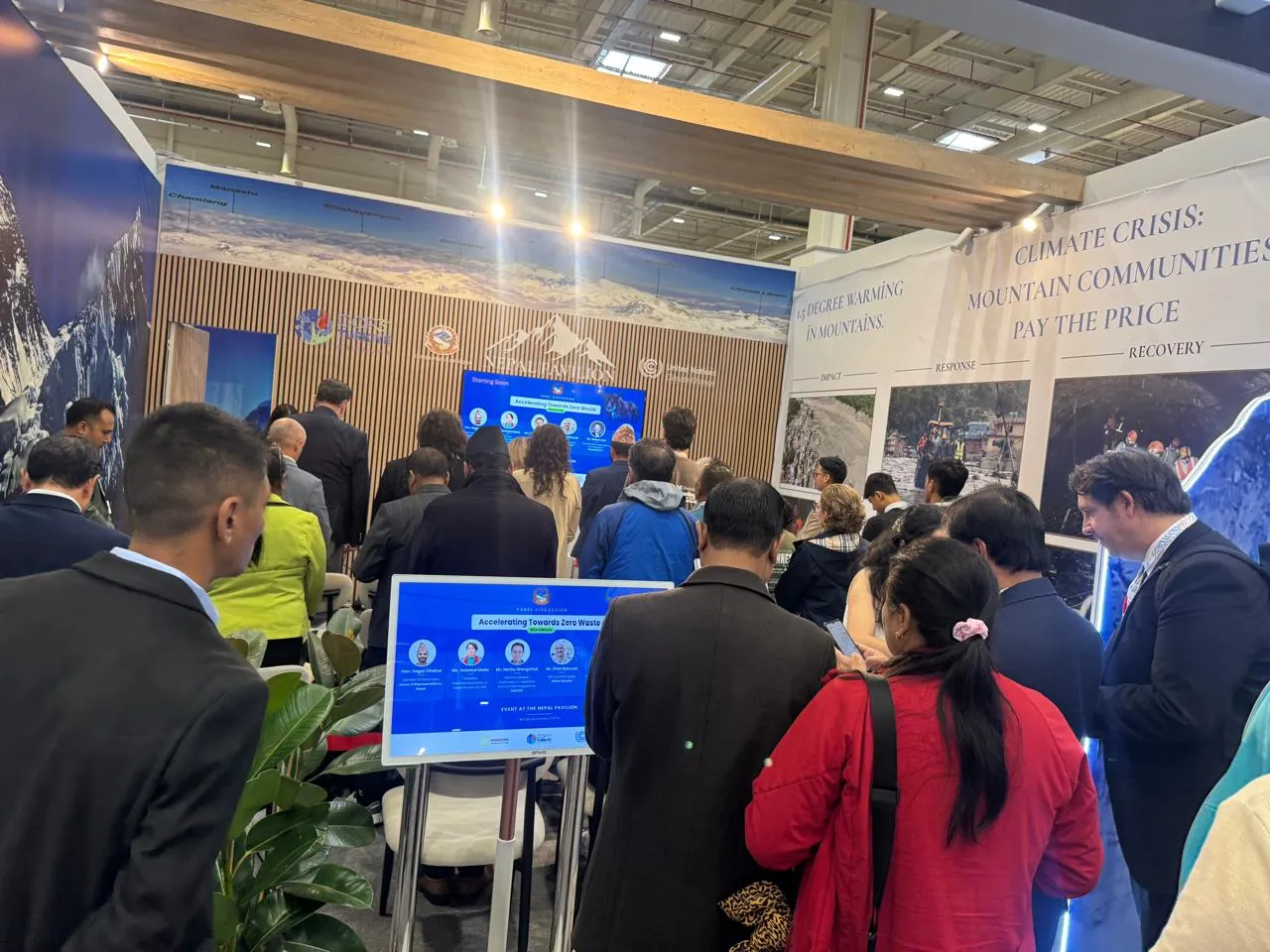
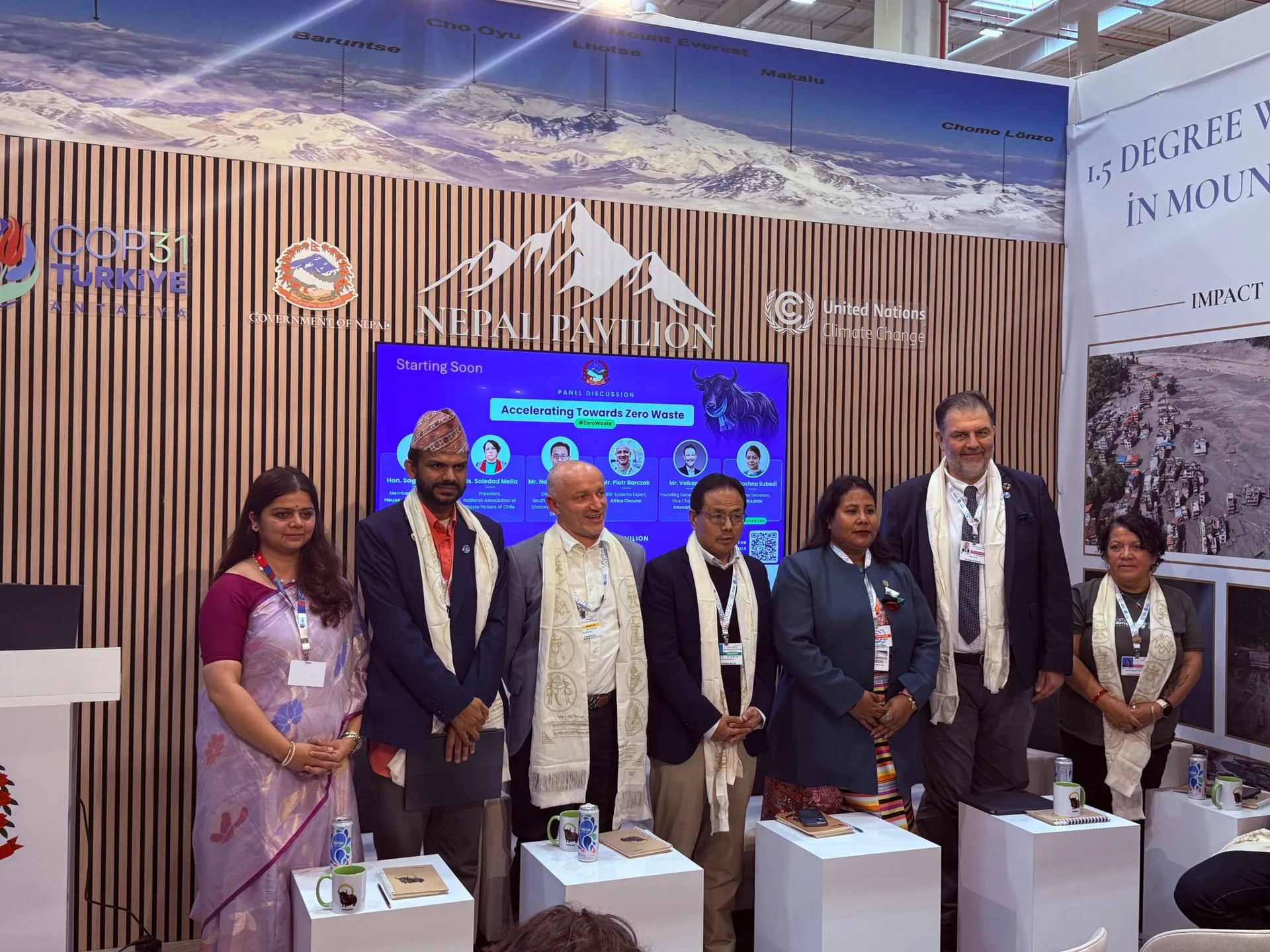
In line with this important connection, CREASION led a panel on Zero Waste and Sustainable Waste Management at the Nepal Pavilion during the 31st United Nations Climate Change Conference (COP31) in Antalya, Turkey, on 11 November 2026. The session brought together representatives from government, regional cooperation institutions, the private sector, circular economy organizations and waste worker networks to examine how Zero Waste approaches can contribute to climate mitigation, accelerate the transition towards a circular economy and create more inclusive waste management systems.
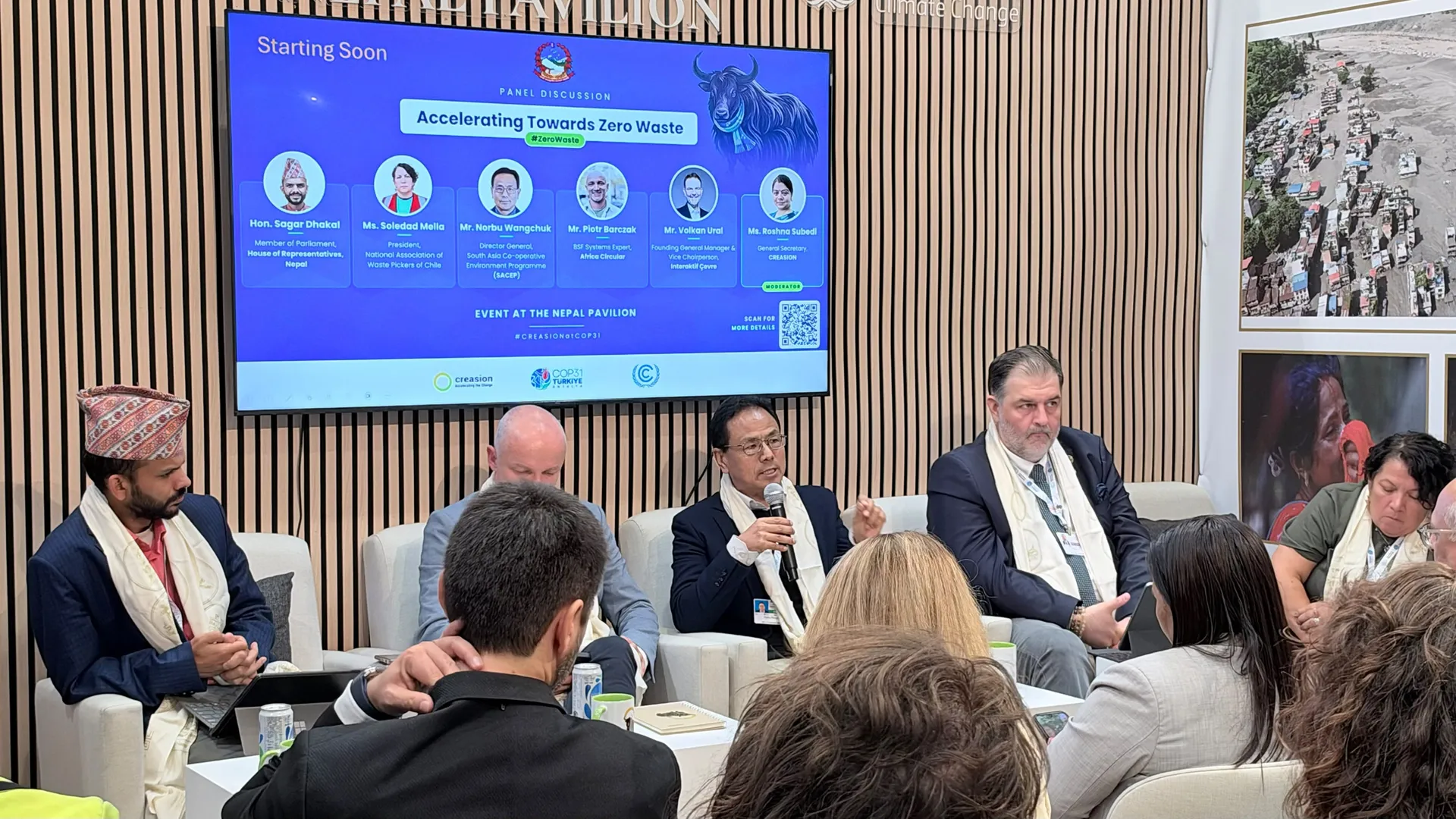
Moderated by Ms. Roshna Subedi, General Secretary of CREASION, the dialogue featured Hon. Mr. Sagar Dhakal, Member of the House of Representatives of Nepal; Mr. Volkan Ural, Founding General Manager and Vice Chairperson of Interaktik Cevr and Executive Director of ClimeCo Türkiye; Ms. Soledad Mella, President of the National Association of Waste Pickers of Chile and International Secretariat Member of REDLACRE; Mr. Norbu Wangchuk, Director General of the South Asia Co-operative Environment Programme (SACEP); and Mr. Piotr Barczak, BSF Systems Expert at Africa Circular.
By bringing together these diverse perspectives, CREASION sought to move the Zero Waste conversation beyond the technical dimensions of waste disposal and towards the broader policy, institutional, economic and social transformations needed to make circular systems work. The discussion focused on reframing waste management as a climate and development priority, highlighting the need for integrated solutions, connecting local action to collective progress, placing people at the center of the Zero Waste transition, and translating policy commitments into practical local implementation.
Reframing Waste as a Climate and Development Priority
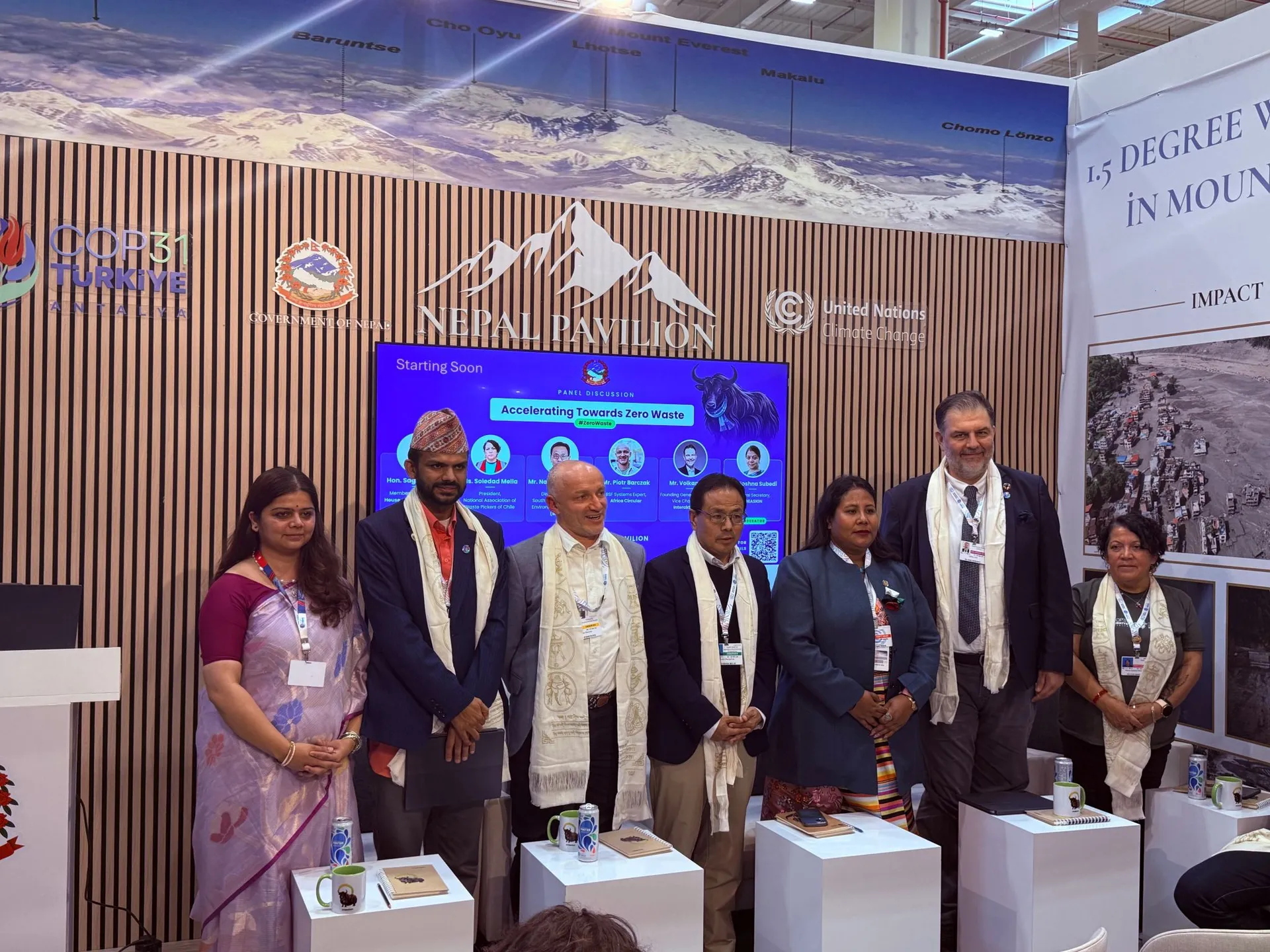
One of the key messages that came from the dialogue was the need to recognize waste management as a fundamental part of climate action instead of being treated as a standalone environmental concern. This is because globally the waste sector contributes significantly to methane emissions through the decomposition of organic waste in landfills and open dumping sites. At the same time, the extraction, production, transportation, and disposal of materials generate emissions throughout their life cycles. This means that the climate implications of waste cannot be addressed through improved disposal systems alone. They require a broader transition towards resource efficiency, waste prevention, and circular production and consumption patterns.
The discussion emphasized the importance of moving away from the conventional linear model of extraction, production, consumption, and disposal. Instead, resources must be retained within the economy for as long as possible through prevention, reuse, repair, recycling, composting, and recovery.
This shift is relevant for countries such as Nepal, where rapid urbanization, growing consumption and limited waste management infrastructure are placing increasing pressure on municipalities and ecosystems. With a significant proportion of municipal waste consisting of biodegradable materials, investments in source segregation, decentralized composting and integrated organic waste management offer considerable opportunities to reduce methane emissions while generating useful resources for agriculture and local economies.
This conversation brought forward an important fact: zero waste is not just an aspiration to eliminate waste, but a practical framework for addressing emissions at their source, reducing pressure on natural resources and strengthening the resilience of communities.
From Technology to Systems: The Importance of Integrated Solutions
There were also discussions on practical, scalable solutions in accelerating the transition towards circular waste management.
Mr. Piotr Barczak talked about the potential of Black Soldier Fly (BSF) systems as part of integrated organic waste management. Such approaches show how biodegradable waste can be transformed into valuable resources rather than being sent to disposal sites. However, the broader significance of these solutions is in how they can be incorporated into comprehensive waste management systems, supported by appropriate infrastructure, technical capacity, and resource recovery pathways.
Mr. Volkan Ural shared perspectives from the private sector on resource recovery, circular economy approaches, and practical opportunities for businesses to contribute to more sustainable waste management. The transition to Zero Waste cannot just depend on municipalities managing waste after it has been discarded. It needs producers and businesses to rethink product design, packaging, material use, and end-of-life management. The private sector must become an active participant in preventing waste generation and creating markets for recovered materials.
Together, these perspectives showed an important distinction. While technological solutions are important, their effectiveness depends on the systems surrounding them. Infrastructure, policy incentives, market linkages, institutional coordination and community participation must advance together for circular solutions to achieve lasting impact.
Regional Cooperation: Connecting Local Action with Collective Progress
Waste does not respect administrative or national boundaries. Plastic pollution travels through rivers and oceans; supply chains connect producers and consumers across countries and continents. The challenges of managing growing waste volumes are shared by cities throughout globally.
Mr. Norbu Wangchuk brought this regional perspective to the discussion, by highlighting the importance of cooperation and partnerships in advancing sustainable waste management and circular economy practices across South Asia and beyond.
For a region experiencing rapid urbanization, growing material consumption, and increasing environmental pressures, fragmented national approaches are unlikely to deliver the scale of transformation required. Regional and global cooperation can facilitate knowledge exchange, strengthen institutional capacities, encourage the adoption of effective practices, and create opportunities for collaboration on shared environmental challenges. It can also connect countries with international expertise, networks and emerging solutions that can be adapted to their respective contexts.
This is important for Nepal, since regional partnerships can help connect local experiences with wider policy discussions, technical expertise and emerging circular economy opportunities. Similarly, global collaboration can bring international knowledge, innovation, and momentum to local efforts. While solutions must be adapted to local contexts, progress can be accelerated when countries learn from one another and work towards common objectives.
Putting People at the Centre of the Zero Waste Transition
The transition towards Zero Waste must also be socially and economically inclusive. Waste pickers and informal waste workers are crucial to material recovery and recycling systems across the world. Through their daily work, they recover valuable materials, reduce the volume of waste, reach disposal sites, and contribute to the functioning of circular economies. Yet, their contributions frequently remain unrecognized, and many continue to work without adequate occupational safety, social protection, or institutional representation.
Drawing on her experience in Chile and the wider Latin American waste picker movement, Ms. Soledad Mella highlighted the role of waste workers and the importance of recognising their contributions within formal waste management systems. In this sense, Zero Waste cannot be considered successful if the people who make resource recovery possible are excluded from its benefits.
Formalization of waste management systems must therefore go beyond introducing new infrastructure or institutional arrangements. It must create meaningful opportunities for waste workers to participate in decision-making, access safer working conditions, secure fair compensation, and benefit from the economic opportunities generated through recycling and resource recovery.
Building a circular economy must also mean building a fairer economy, one that recognizes existing contributions and ensures that the transition creates opportunities rather than deepening existing inequalities.
Connecting Policy Commitments with Local Implementation
The participation of Hon. Sagar Dhakal, Member of the House of Representatives of Nepal, brought the national policy and governance dimension into the dialogue.
The transition towards Zero Waste needs more than isolated projects or short-term initiatives. It depends on an enabling policy environment, effective institutional coordination, adequate financing, and the capacity of local governments to implement sustainable waste management systems.
For Nepal, this means strengthening the connection between national climate commitments and municipal waste management priorities. Waste reduction, methane mitigation, source segregation, recycling and organic waste processing must be reflected in relevant climate and development policies, supported by appropriate financing and implementation mechanisms.
Local governments also need the resources and technical capacity to move beyond conventional collection and disposal models. At the same time, businesses, communities, civil society organizations and development partners must be engaged as active contributors to the transition.
Hence, policy ambition cannot success without practical implementation. Without this connection, zero waste risks being a commitment on paper rather than becoming a measurable change in how resources are managed.
From COP31 Dialogue to Collective Action
CREASION’s active engagement in COP31 went beyond convening a panel of experts. It provided a platform for perspectives that are essential to the Zero Waste transition but are not always brought together within the same conversation.
Acceleration towards Zero Waste requires an integrated approach. Policymakers must create enabling environments, regional institutions must facilitate cooperation, businesses must invest in circular solutions, technical experts must strengthen practical resource recovery systems, and waste workers and communities must be recognized as equal participants in the transition.
For Nepal, the dialogue also represented an opportunity to connect its experiences and challenges with international expertise, while contributing to a wider conversation on how Zero Waste can become a more prominent component of climate action.
“CREASION has been working for over 21 years at the intersection of sustainability, climate action, and circular economy. Our experience shows that meaningful change is possible when innovative approaches move beyond policy discussions and are translated into practice. We are currently working with the Ministry of Physical Infrastructure and Development on polices, standards, and guidelines. Dialogues such as this one, which bring together regional and global partners, are important in closing the gap between policy commitments and concrete action,” said Ms. Roshna Subedi, General Secretary of CREASION, who also moderated the session.
This commitment to dialogue and collaboration extends beyond international platforms. Prior to COP31, CREASION was also one of the main organizers of Kathmandu Climate Week, helping bring together diverse stakeholders to discuss climate challenges, circular economy solutions and pathways for collective action. The dialogue at COP31 built on these ongoing efforts, connecting conversations and experiences from Nepal with regional and global perspectives and reinforcing the importance of sustained collaboration in advancing the Zero Waste agenda.
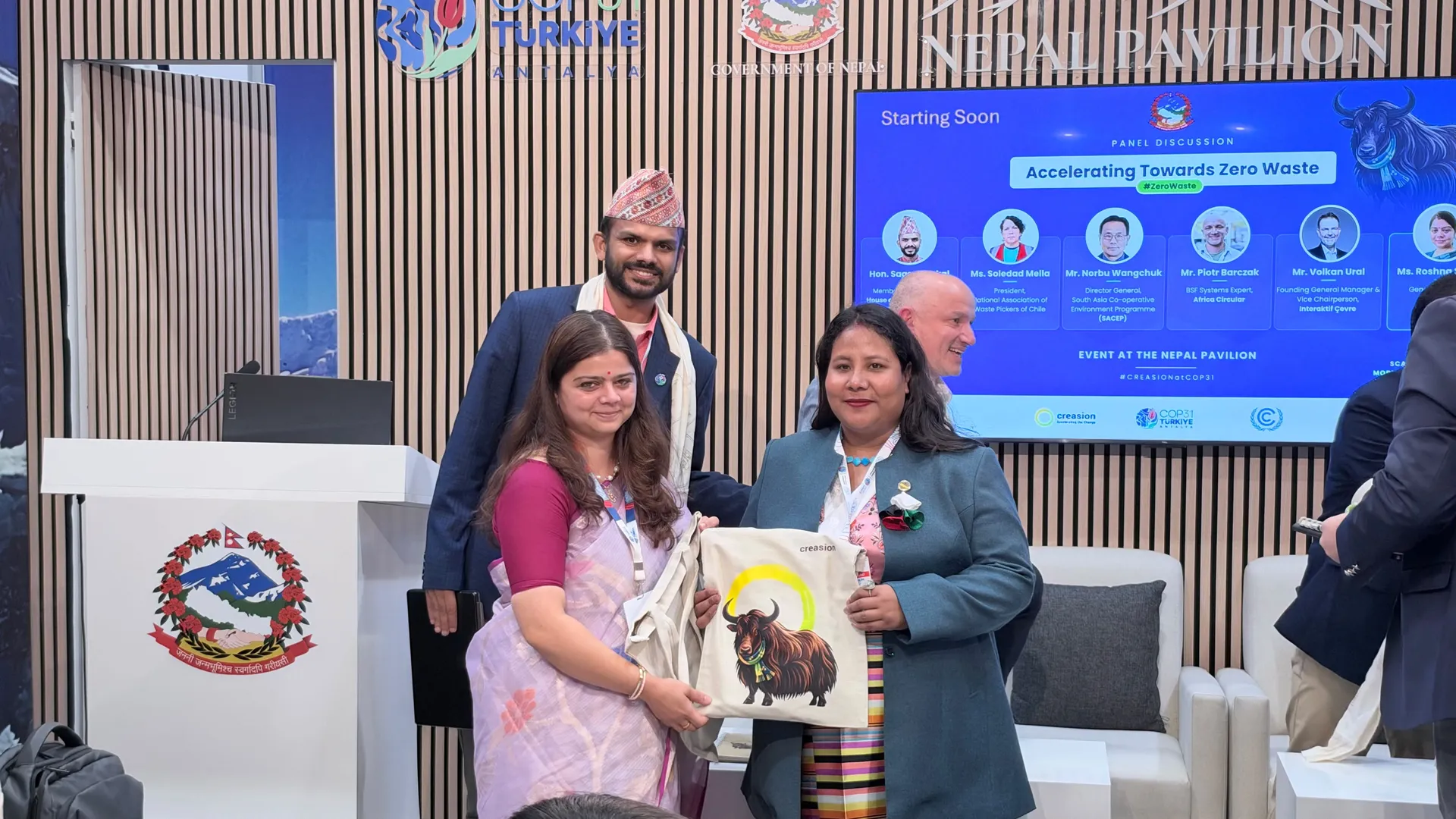
CREASION recognizes that the transition cannot be achieved by any single institution or stakeholder. It requires sustained collaboration between governments, municipalities, the private sector, civil society, development partners, and communities. Equally, it requires a shift in how waste is valued: not as an unavoidable burden to be collected and discarded, but as a resource that can support climate action, economic opportunity, and sustainable development.
The next step must be to translate these conversations into stronger partnerships, supportive policies, practical investments, and locally grounded solutions. Zero Waste is not simply about creating less waste. It is about rethinking the systems that create it, recognizing the people who manage it and building an economy in which resources are valued rather than discarded.
As the global climate community continues to pursue more ambitious pathways towards a sustainable future, CREASION calls for Zero Waste to be recognized not as a peripheral environmental issue, but as an essential part of the climate action agenda. The dialogue at COP31 was one contribution towards that goal. The responsibility now lies with all stakeholders to turn shared understanding into collective action.