
The Vaccine Carriers Recycling project is closely aligned with Nepal’s constitutional, policy, and international commitments on sustainable development and climate resilience. The Constitution of Nepal (2015) guarantees every citizen the right to live in a clean and healthy environment (Article 30) and mandates the State to pursue policies for environmental protection, sustainable natural resource management, and climate resilience (Article 51(g)). This project supports these constitutional directives by promoting low-carbon urban development, clean energy integration, improved waste management, and green public infrastructure in urban areas.
The project also advances the objectives of Nepal’s 15th Five-Year Plan and aligns with the upcoming 16th Plan, both of which prioritize Green, Resilient, and Inclusive Development (GRID). It supports climate-smart urban planning, disaster risk reduction, and the integration of sustainability into city systems and services. In terms of international climate obligations, the project contributes directly to Nepal’s Nationally Determined Contributions (NDC) 3.0 (2025–2030) by helping reduce greenhouse gas emissions, promoting sustainable transport, increasing energy efficiency, and building climate-resilient urban infrastructure.
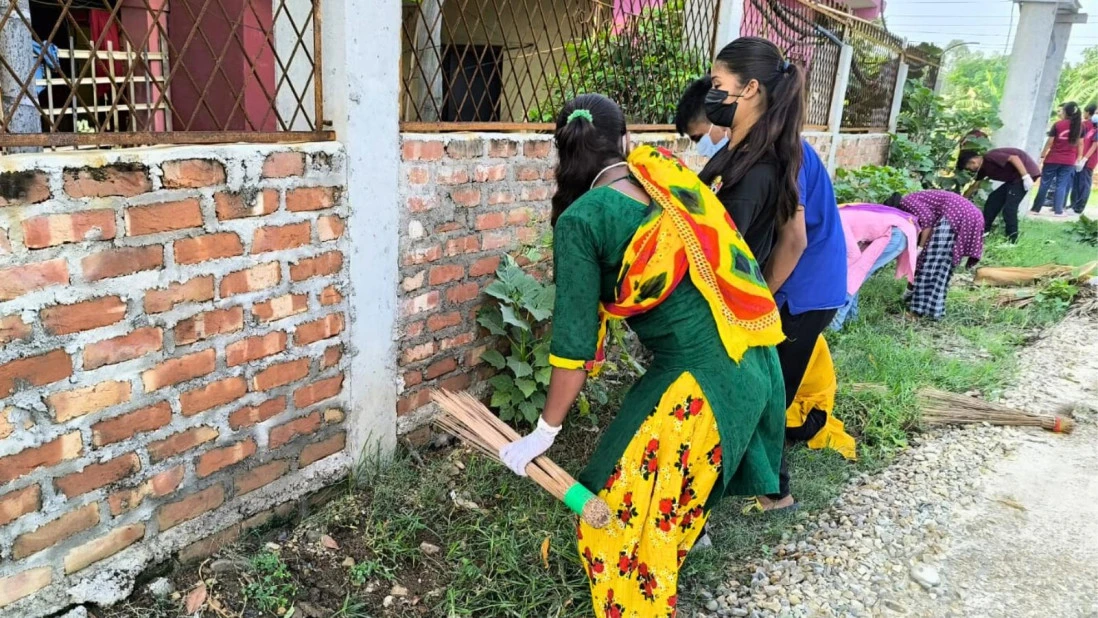
Furthermore, the project supports the achievement of several Sustainable Development Goals (SDGs), including SDG 11 (Sustainable Cities and Communities), SDG 13 (Climate Action), SDG 9 (Industry, Innovation, and Infrastructure), SDG 6 (Clean Water and Sanitation), SDG 7 (Affordable and Clean Energy), and SDG 12 (Responsible Consumption and Production). Importantly, the project also promotes SDG 4 (Quality Education) and SDG 8 (Decent Work and Economic Growth) by engaging youth and students in climate awareness, green innovation, and sustainability practices through community outreach, school programs, and local leadership opportunities. By empowering young people and integrating environmental education into the city-building process, the project contributes to long-term behavioral change and prepares the next generation to lead climate-smart urban transformation. It also complements the National Urban Development Strategy (NUDS) and the Climate Change Policy 2019, both of which emphasize sustainable, inclusive, and resilient urban development. By aligning with the GRID Framework, the project ensures that climate-smart urban transformation also addresses equity, economic opportunity, and long-term sustainability, contributing meaningfully to Nepal’s transition to a climate-resilient future.