If you have ever walked a trail in Nepal, you probably remember the sound before the view. The river, somewhere far below, talking to itself all day long.
Maybe you are a foreigner who came for Everest and stayed for the dal bhat. Maybe you grew up here and took that sound for granted, the way you take the rhythm of your own heartbeat for granted. Either way, you know it.
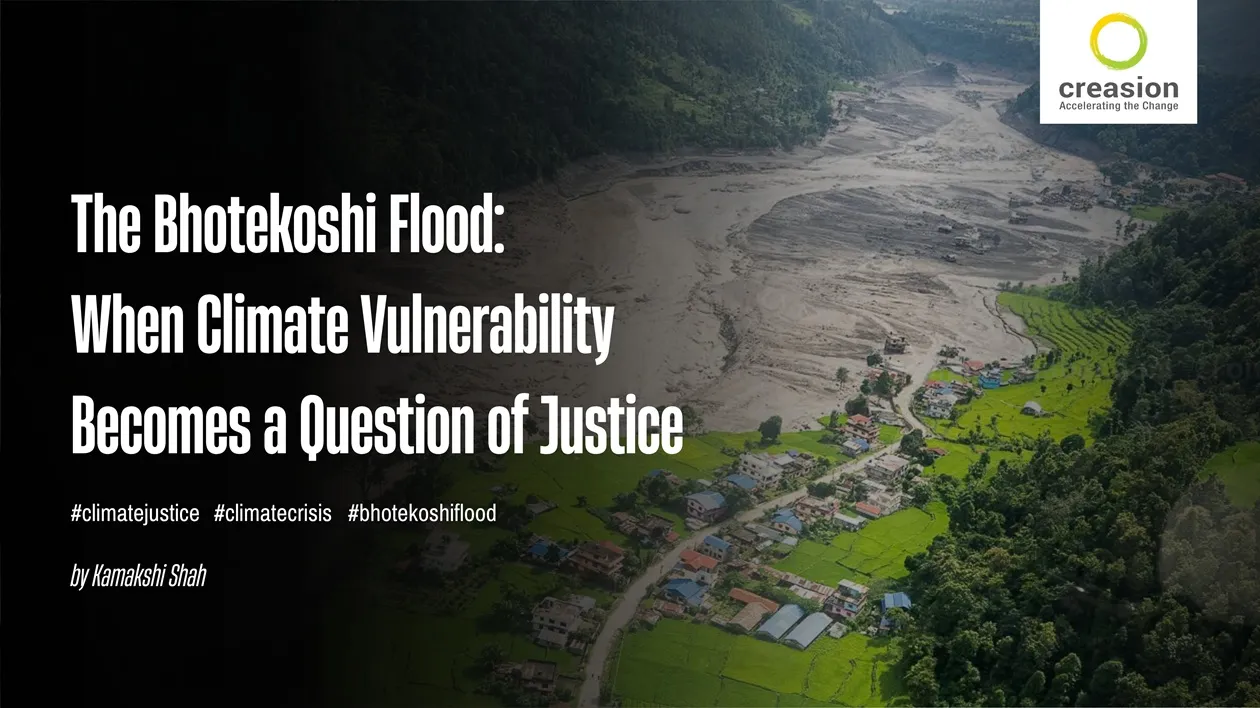
The disaster struck in August, tearing away roads, bridges, and the hillsides that once held them. Now, this September, the disruption lingers. The Trishuli and the Narayani are not talking anymore, they are roaring, brown, and swollen.
Late September is meant to be Nepal's sweetest season. The monsoon lifts, the mountains step out from behind the clouds, and a teahouse owner somewhere above the Marsyangdi sweeps her courtyard and waits for the first trekkers of autumn. This year, many of those courtyards will stay empty. Some are no longer there.
We often call tourism an 'industry' as if it were a mechanical factory line, but in reality, it is a living, breathing network of people. It is the porter in the Kaligandaki gorge who sends his daughter to school on what he earns carrying your bag. It is the homestay mother in Nawalparasi who learned three words of French and a dozen ways to make tea. It is the young naturalist in Chitwan who can hear a rhino before he sees it. When a trail washes away, a traveler loses a holiday. For local families, it means a sudden wave of canceled bookings, damaged homestays, and severed transport lines.
Then there is the part nobody photographs: the nights spent watching the water climb toward the danger mark, a phone in one hand, a bag packed by the door.
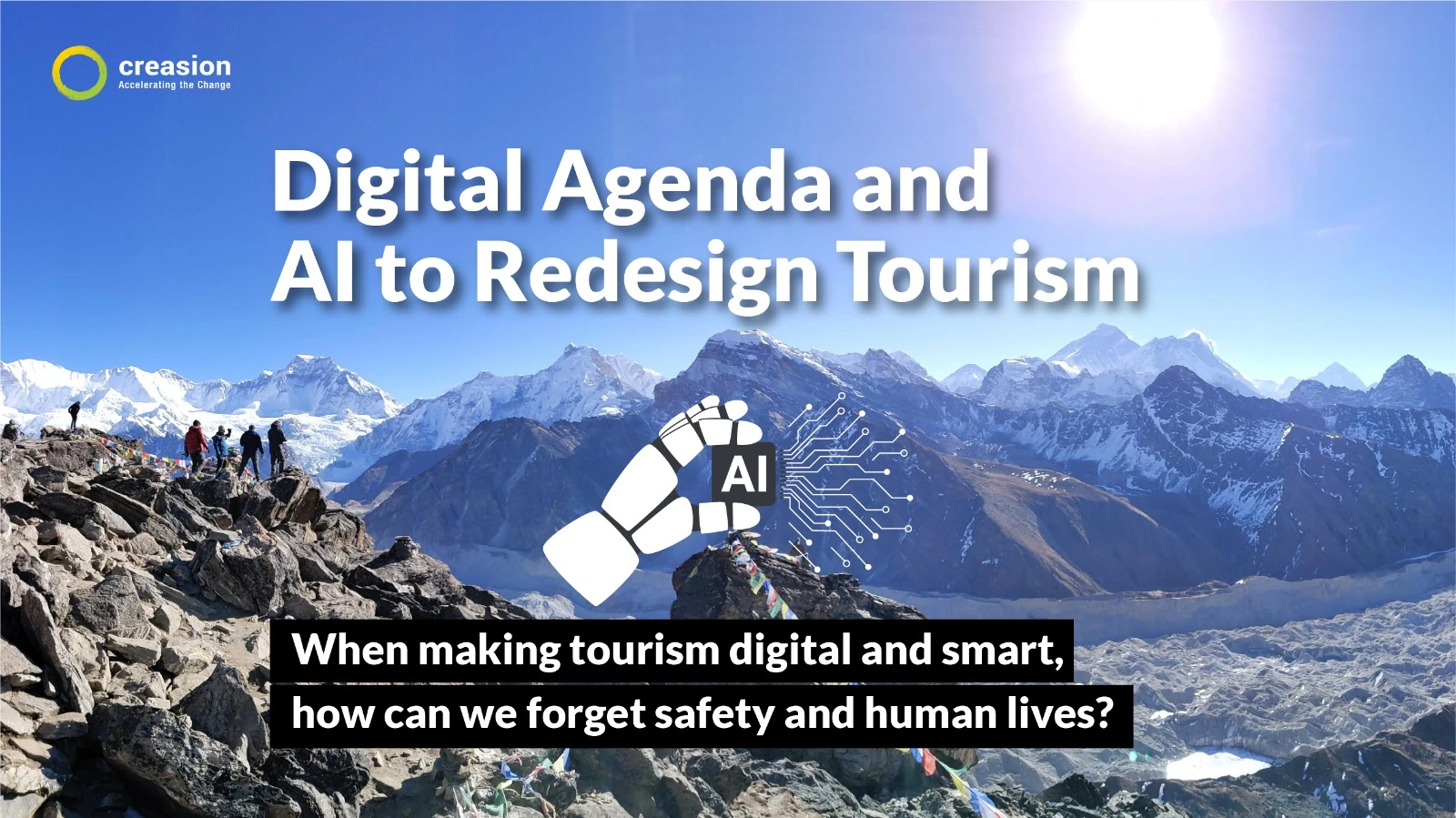
Today is World Tourism Day, and the theme UN Tourism chose this year is "Digital Agenda and Artificial Intelligence to Redesign Tourism." I will be honest. Standing beside a river like this, those words feel far away. Nobody sheltering in a school building is thinking about algorithms.
But the longer I sit with it, the more I believe this is exactly the moment the theme was made for.
Nepal already sends flood warnings by text message from gauges on its rivers, and those messages have saved lives. Now imagine that system learning. Artificial intelligence can read rainfall records, soil moisture, upstream water levels and satellite images of slopes that are starting to slide, all at once, and turn them into a warning that arrives hours earlier and names the exact valley, the exact bridge. Imagine that warning reaching every guide, homestay and trekking group in the area. Imagine an app quietly telling a group of hikers to take the other path today.
Hours matter here. Hours are the difference between a changed plan and a family's worst day.
There is a second lesson in this flood, and it is harder to hear. Almost every rupee Nepal earns from tourism arrives on foot, in two short seasons, along roads the monsoon can erase in an afternoon. That is a lot of hope resting on a very thin path.
We can't stop the monsoon. But we can change how ready we are when it comes. For too long, Nepal's tourism has waited for disaster and then cleaned up after it. It's time to prepare before the water rises, and this year's World Tourism Day theme, on digital tools and AI, points the way.
Technology can help in two simple ways.
It can save lives. AI can read rain and satellite data and warn a village hours before a flood hits. Those hours give people time to move somewhere safe.
It can save livelihoods. When a trail washes away, a family's income shouldn't wash away with it.
That's why new ideas matter. Digital nomads, stargazing trips under our dark skies, virtual tours of Mustang's ancient caves: these aren't gimmicks. They're a safety net. Someone working from a Pokhara café for three months won't leave because one highway is closed.
Nothing will replace the trekker with muddy boots or the pilgrim sitting quietly in Lumbini. But technology can give our communities something extra to hold on to. A country this beautiful, and this fragile, shouldn't have to hold its breath every monsoon.
None of it works without the basics. A warning cannot reach a village with no signal. A remote worker will not stay where the internet dies every evening. Before the clever tools come the towers, the cables, the shared data, and the training for the people who will actually use them.
There is an old Nepali saying: "Khola tarepachhi lauro birsinchha." Once you have crossed the river, you forget the walking stick. It is what we do after every disaster. The water goes down, the roads reopen, the trekkers return, and the lessons get left behind on the far bank.
Let this be the year we keep the stick.
And to everyone who has ever been welcomed here with a cup of tea and a warm "Namaste, basnus na": Nepal has always looked after its guests. This World Tourism Day, it is our turn, all of us, to help look after Nepal.