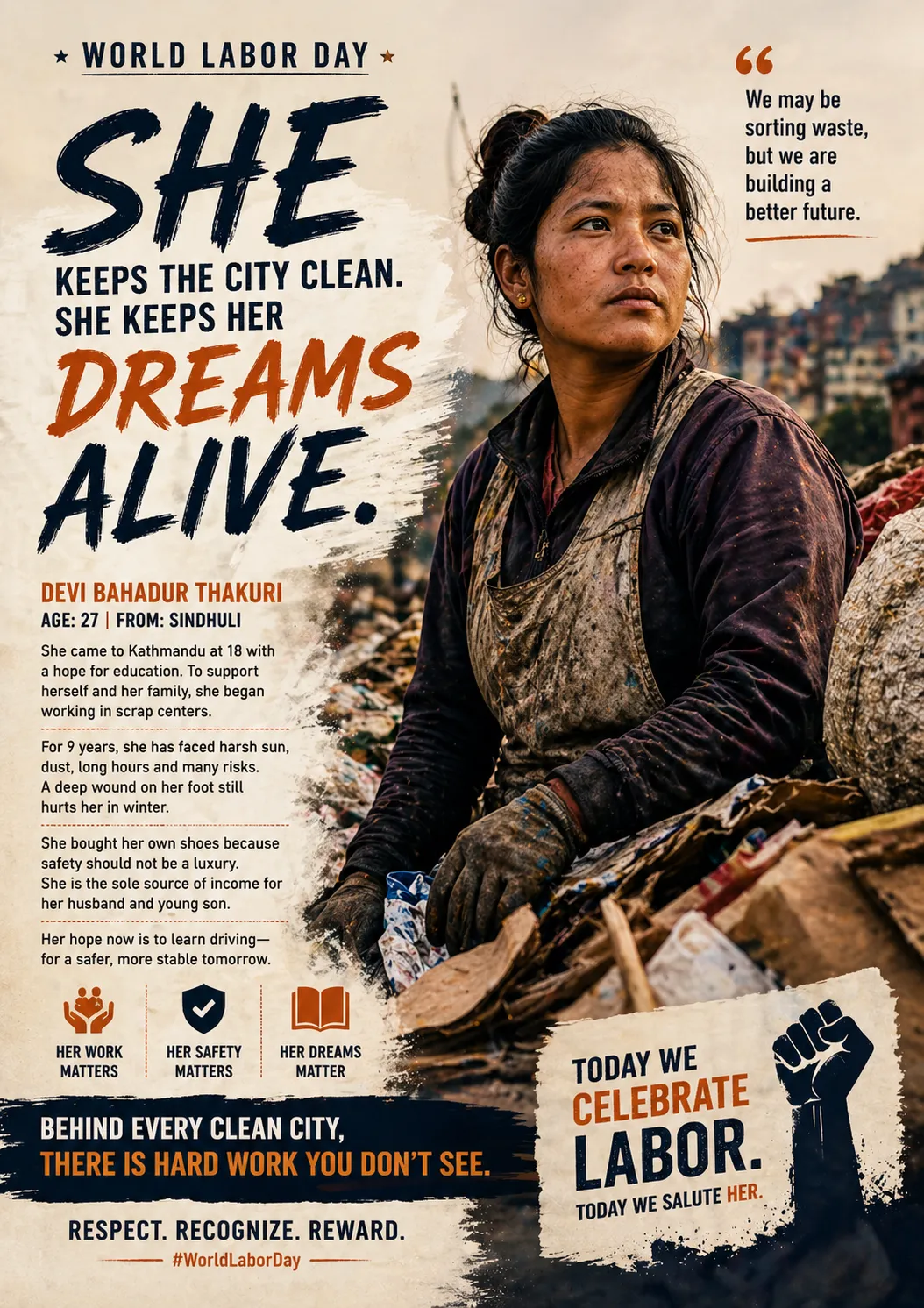

The UN Environment Program reports that every day, the equivalent of 2,000 waste trucks full of plastic are dumped into the world's oceans, rivers, and lakes. Every year, 19-23 million tonnes of plastic garbage flow into aquatic environments, damaging lakes, rivers, and oceans. Binu Majhi, 32, of Golanjor Rural Municipality, is unaware of the negative impact of plastic pollution on our lives. She has seen and used plastics since her childhood but never realized the harmful effects they could have on our lives. “I was shocked to learn about the negative impact of plastic pollution, particularly its effects on a wide range of animals and the (Pic 1: Binu Majhi, trainee of vulnerable community training) environment,” said Binu, participant who received training through the CAP project. and sold, providing us with an opportunity to earn extra income."
Following the training, Binu began collecting PET bottles and other recyclable debris, which she sells to local aggregators. She earns an average of Rs 200 every month. While it may be a small sum, it has motivated me to be more mindful about properly disposing of plastic waste. I also gather the recycable wastes especially PET bottles, around my house and, when possible, sell it to waste aggregators. "This is a valuable approach to keeping our surroundings clean while also generating extra income,” said Binu. She added that she thoroughly enjoyed the training, which was engaging with interactive games and discussions, and provided an opportunity to learn many practical skills.